The “sister” post, in Romanian, is here.
Day one, landing in the middle of the night in Bucharest, followed by the early morning pilgrimage to Hulubești, to pay respects to my parents at their resting place.
Back to Bucharest in the afternoon, The Great Hunger led us to a trip to Ciorbărie for ciorbă de burtă (tripe soup). I love ciorbă de burtă. It’s like a religion. It’s an elaborate dish served with condiments on the side: vinegar, mujdei (garlic sauce), sour cream, and hot peppers. Everyone seasons it the way they like it, of course, but this time, despite all efforts to the contrary, it was tasteless, no longer a religion but an abject heresy. Even so, I ate it out of respect for myself. And for the tripe. In any case, at least it didn’t upset my stomach the way the goulash upset Anca’s.
Day two, lamb fresh pastrami, and mici at Berăria H. The pastrami was bad (salty and expensive), the mici were decent, and the must was obscenely expensive and sweet – it tasted like water with sugar and coloring (and I suspect that’s exactly what it was). It seems the motherland is testing my taste buds and digestion.

Days 3 to 10: I’m leaving with Mișu for the Bulgarian seaside. As a precaution, despite my protests, he connects a thick intravenous tube to me. In the end, there’s no saying NO to Mișu. Although I was a bit confused, it turns out there’s an explanation for everything: he said it’s so I don’t have to make so many trips (to … wherever, I didn’t quite get it). Ah well, with his experience as a culinary show producer, he knows what he’s doing (or so I hope). I guess he doesn’t want to see exploding intestines all over his clean camper.
And so I spent the entire time in the Schengen Area with the catheter connected. Slowly I understood: a holiday in Europe is not lived. It is infused.
On the rainy and windy Bulgarian coast, every evening brought freshly defrosted mici, sausages sizzling on the grill with their penetrating, dizzying smell, and an old wine with a story all its own.
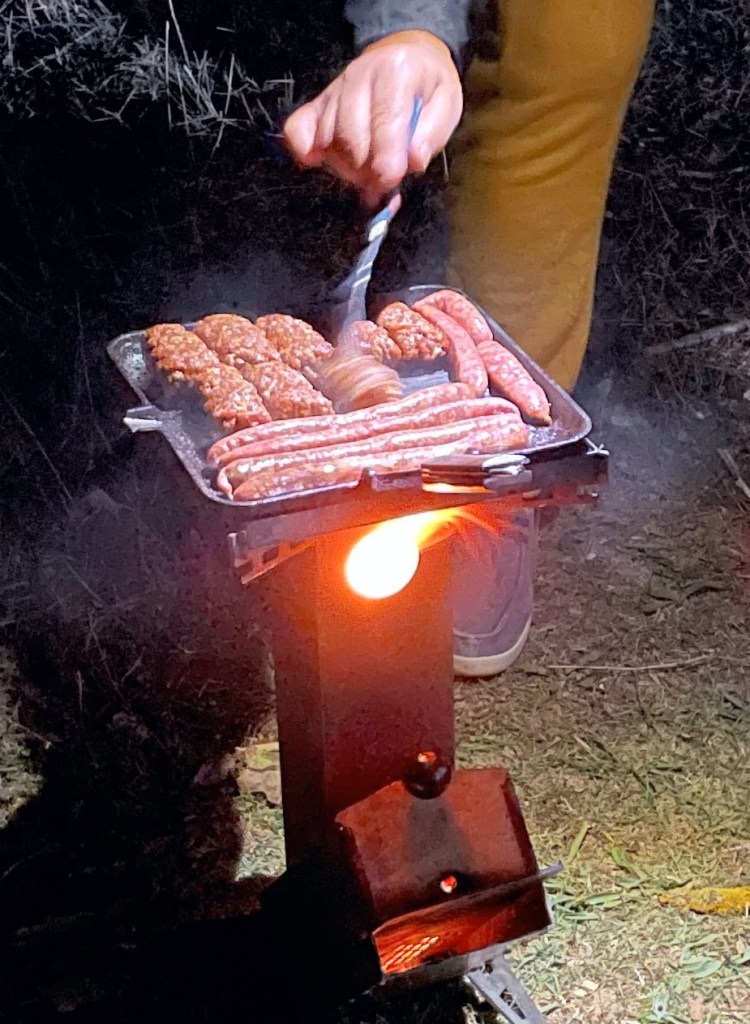
In the mornings, there were eggs and frankfurters (cremvurști). Romanians love frankfurters. Americans seem to like them as well, but, unlike the American ones, which have sawdust and the somewhat fleeting illusion of taste, the Romanian ones have a secret memory of their own, a national pride, and you can actually taste the animal they come from!
In Germany, we had pastrami (very good this time), Pleșcoi sausages, and the surprise my uncle bought for us – so proud of himself – mititei! (another word for mici). He was as happy as if he had found a rare collector’s coin! I internally fainted a little, but I ate like I was in a hot dog eating competition! I shouldn’t have, but the food battle with myself was already long lost!
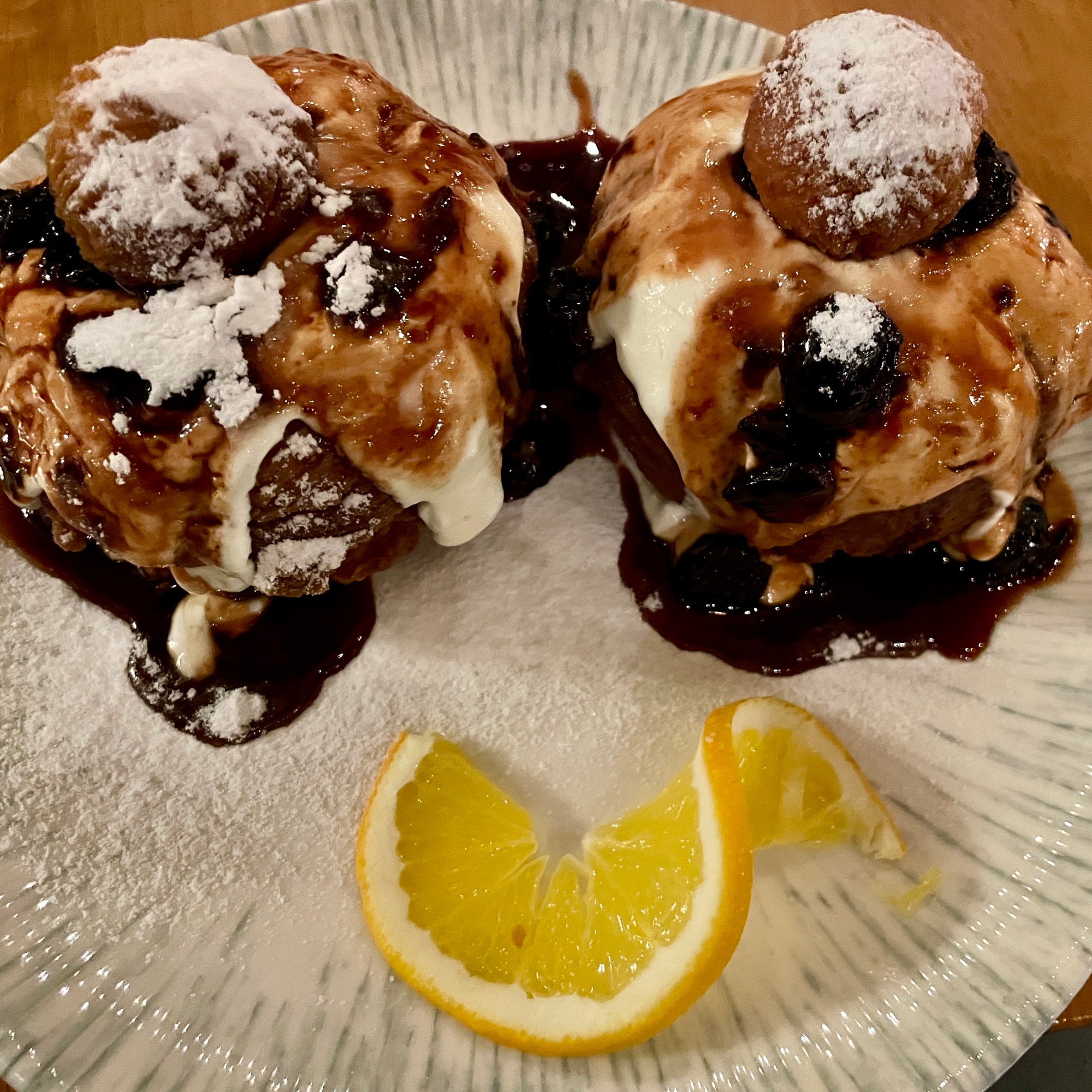
I barely landed back in Bucharest and I’m invited to a secret spot, Terasa Florilor, where the winner of the “Golden Mici” competition cooks. The IV tube that I had with me all over Europe was starting to get clogged, so I unclogged it with sweet cheese dumplings (papanași) and lots of house wine. It worked flawlessly. Ah: The wonders of the alternative Romanian medicine!
I was a man on a mission, so I kept stuffing myself with mici at lunch, dinner, and even in the morning, cold mici – which is a big no, and I utterly confused a waiter when I told him. He looked at me as though I were some stupid American who doesn’t know better but, in the end, he gave me a little credit: if you slice them thinly, they look like salami, plus, in Romania, you never throw away food.
On the evening before last, again at Terasa Florilor, I traded the mici for ciolan (pork hocks). Evolution. Maturity.
A thorough study of the attached photo will reveal three middle aged adults, more or less able-bodied, starting The Brotherhood of the Bones. The fourth one, under the spell of all the stories about mici and sausages, was eating like a beginner: mici and sausages. The professionals took care of the knuckles so well that, as Mișu said, the bones could go straight to the Antipa Museum so the children could see them and ask, “Are those dinosaur bones?”
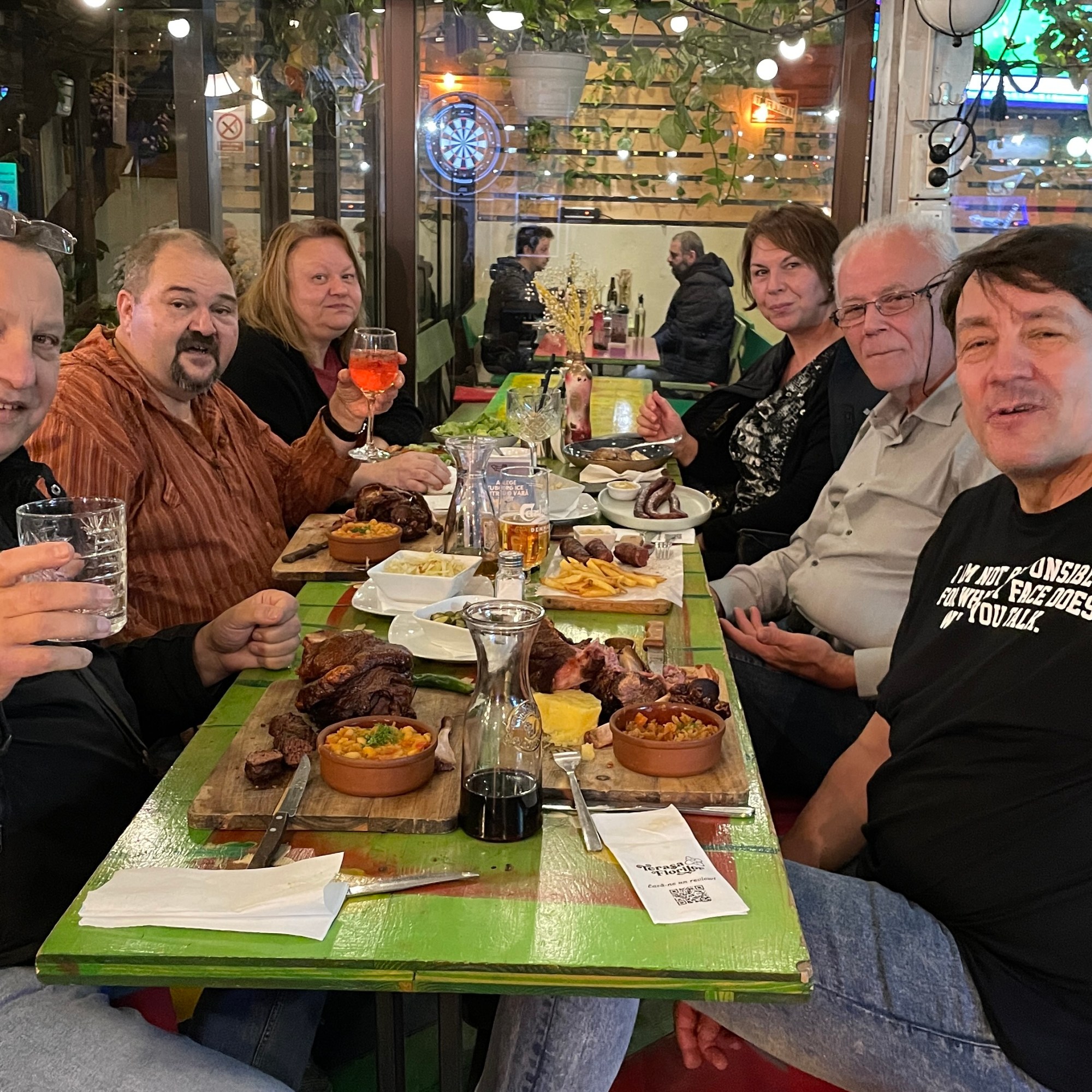
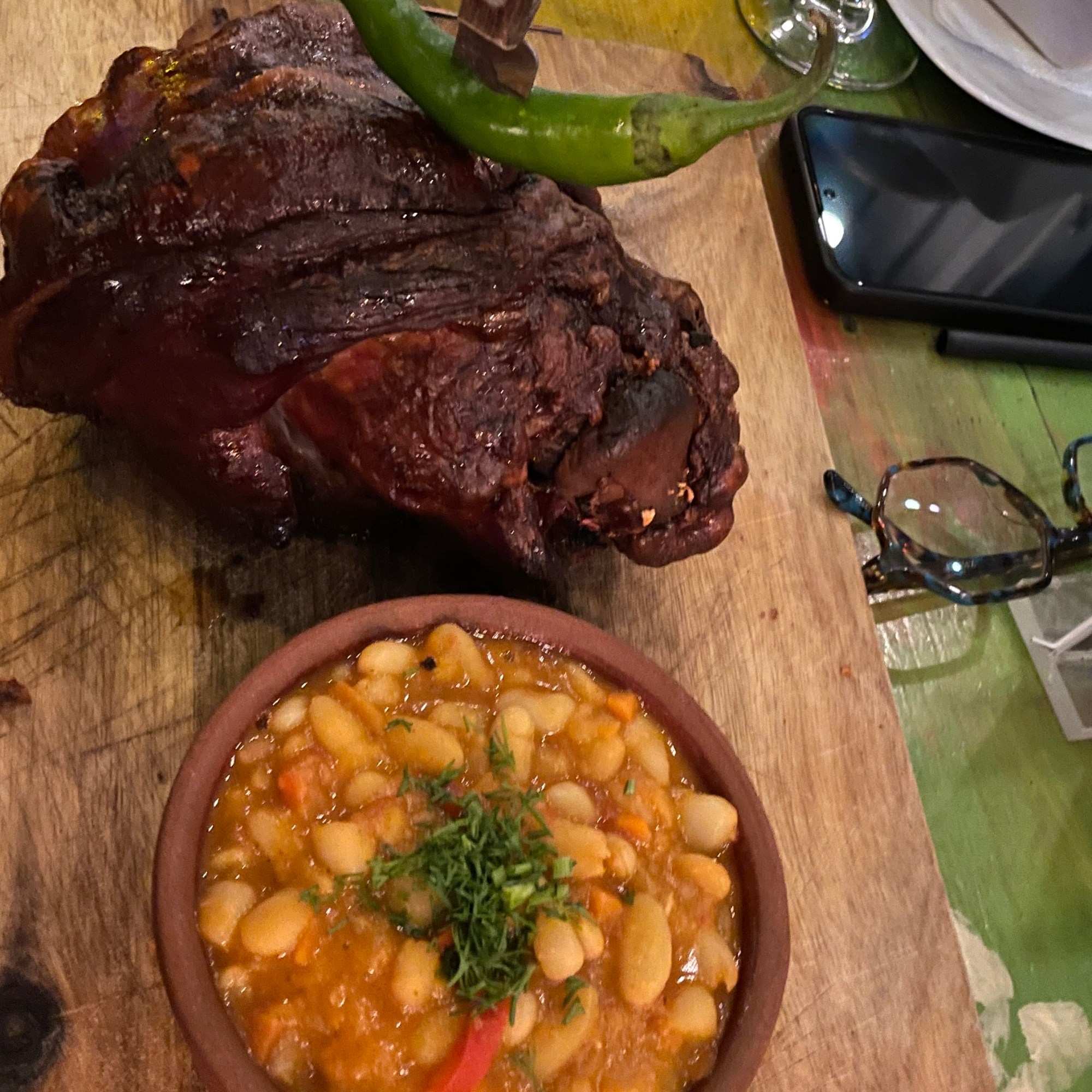

And the correct answer would be: “No, this is what the big people ate when they said they were on a diet.”
And what about me?
I had that IV stuck in me the whole vacation, not as a patient, but as someone who knows that you return home not just to see places but to re-experience tastes, people, stories, and the ways we Romanians love and live.
The main reason is that we don’t eat to satisfy our hunger. We eat so we don’t forget who we are, and, because I didn’t forget, I gained six kilograms, or, as a friend would say, four liters and two kilos!
Glossary of terms and other considerations:
- Mici / Mititei: Small grilled rolls of minced meat, also known as skinless sausages, a quintessential Romanian BBQ dish
- I wrote extensively about mici in many previous posts
- Cremvurști: Frankfurters or wieners, a better version of hot dogs.
- Pleșcoi sausages: a Romanian sausage made from mutton spiced with chili peppers and garlic, traditionally made in and around the Pleșcoi village, in the Buzău County of Romania.
- Pleșcoi sausages has been registered as a protected geographical indication (PGI) product in the European Union.
- Micul de Aur: Literally “The Golden Mic“, referring to a popular culinary competition or festival dedicated to finding the best mici.
- Papanași: Traditional Romanian fried or boiled sweet cheese donuts, typically served with sour cream and jam.
- I wrote extensively about Papanasi in some of my previous posts
- Some os the best ones (if not the best) I had at Hanu’ Berarilor Casa Elena Lupescu, on Pache
- Ciolan: Pork hocks, often prepared roasted (ciolan afumat – smoked hocks) – a very hearty dish.
- Antipa Museum (Muzeul Antipa): The National Museum of Natural History in Bucharest, famous for its large exhibits, including dinosaur skeletons.
- Ciorbărie: “This small eatery runs on a brilliant, simple concept of serving only ciorbă, the trademark sour soup Romanian cuisine is known for. Expect seven or eight different kinds of fresh soup each day, served in generous bowls with quality homemade bread and a spicy green pepper (the way locals eat it).” – Lonely Planet
- it seems they “forgot” the hot pepper for me
- it seems they “forgot” the hot pepper for me
Discover more from Nea Fane - Un Biet Român Pripășit în America / A Hapless Romanian Stuck in The US
Subscribe to get the latest posts sent to your email.

 Nea Fane - Un Biet Român Pripășit în America / A Hapless Romanian Stuck in The US