We were getting ready to leave for our Danube Delta adventure and I volunteered to do some shopping at the Obor Market. I was feeling super guilty that two whole days had passed (since I landed in Romania) and I still hadn’t checked out the Market.
“Yo, Fane,” says Mișu, “buy vegetables and some sheep’s ass cheese.”
“What should I buy, dude???”
“Brânză de burduf, but the manly one, you hear me, man, not the one for the weak of heart.”
At Obor, Ibănești booth near Ibănești booth (the craze with the Sibiu feta cheese had passed, now Ibănești is the latest one, since it was accepted as a registered brand in the EU). Obviously, many of these cheeses are knockoffs: it would be impossible for that small a village to produce so much diary. I finally found a non-Ibanesti booth, and I started to taste: old feta, new feta, salty feta, sheep cheese, goat cheese, cow cheese …burduf (the kneaded cheese) balls, yay!
The saleslady gave me a taste of it. It had a consistency like hand cream: rich, creamy, and odorless.
“Ma’am,” I said, “it’s a bit mild. Don’t you have the more manly, stinky cheese?”
“Of course we do. Not too many people want that, though,” she said, and gave me a taste. All right! Wow!
I took a whole cheese, as big as a handball. By the time I got home, the bag had begun to smell a little. I put it in the fridge, and I left with Mișu to prepare the boat for the road. I was away about four hours.
When I got back and entered the kitchen, the refrigerator was crying, “What did you do to me, Don Steffanooo?!?”
….
I wrote the first draft of this post while riding shotgun in the car. Mișu was at the wheel, every so often rubbing his eyes, cracking the windows in a particular sequence (we’re a couple of engineers and we know all about that airflow and whatnot), and he says to me, with a bit of a lump in his throat: “Fane, you really shouldn’t have taken that sheep’s ass wording so damn seriously.”
Glossary of Terms
Telemea de Ibăneşti
Telemea (feta) de Ibăneşti is a traditional Romanian cheese that hails from the picturesque Gurghiu valley. Known for its unique texture that is simultaneously wet and crumbly, this cheese is a culinary delight that is deeply rooted in Romania’s rich gastronomic heritage.
The name ‘Telemea’ is traditionally associated with Romanian cheeses made from sheep’s milk. However, over time, it has also come to represent cheeses crafted from cow’s milk. Telemea de Ibăneşti can be made from either of these milks, adding to its versatility and appeal.
But what truly sets Telemea de Ibăneşti apart from other cheeses is its prestigious distinction as the first Romanian cheese with a protected designation of origin (D.O.P.) protected by the European Union. This recognition not only attests to its authenticity and quality but also opens doors for other traditional Romanian products to gain international recognition.
Telemea de Ibăneşti is more than just a cheese; it’s a testament to Romania’s age-old cheese-making traditions, a treasured product of the Gurghiu Valley, and a symbol of the country’s rich cultural and culinary heritage. Next time you come across this cheese, remember – you’re not just savoring a delicious dairy product, but also relishing a piece of Romanian history.
Source: https://cheeseorigin.com/telemea-de-ibanesti/
Brânză de burduf (also known as “Brânză frământată” (English: Kneaded cheese)) is a soft sheep’s milk cheese produced in Transylvania, on the slopes of the high Bucegi Mountains in the Carpathians, Romania.
To make this cheese, fresh caș produced from the raw milk of heritage sheep breeds such as Turcana and Tigae is cut into small pieces, salted and mixed in a wooden bowl. It is then left to age from 20 days to 2-3 months inside coajă de brad (fir tree or pine bark) or sheep’s skin. As it ripens, its flavor becomes increasingly spicy and salty.
Brânză de Burduf is produced from May to July when the pine bark is rich in flavour. They are processed and sewn together to produce cylindrical containers that are sealed with bark discs at the edges.
The cheese is specific to different areas from the historical regions of Transylvania, Moldavia and Wallachia (also called Brânză în coajă de brad (Cheese in fir shell)).
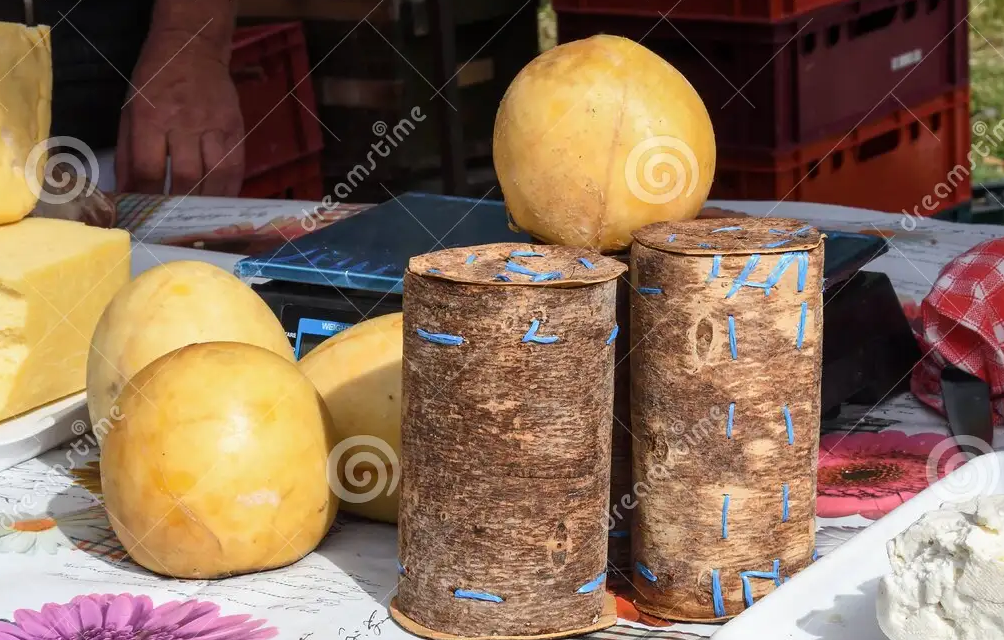
Source: https://www.cheese.com/branza-de-burduf/#
Discover more from Nea Fane - Un Biet Român Pripășit în America / A Hapless Romanian Stuck in The US
Subscribe to get the latest posts sent to your email.

 Nea Fane - Un Biet Român Pripășit în America / A Hapless Romanian Stuck in The US
❤️😂
LikeLike
❤️😂 Misu Predescu
În mie., 22 nov. 2023 la 00:29, Nea Fane – Un Biet Român Pripășit în
LikeLike