
Note: Versiunea in Romaneste este aici
Disclaimer: kind of NSFW
- Introduction
- The Nude Beaches
- The New Vama Veche
- The Last Day of Freedom
- Across the Pond – Atlantic City
Introduction
I hadn’t even finished my masterpiece on clotheslines, ropes, and strings when I realized that I had forgotten many places I had been to when I was a young lad. It seemed so natural for me to carry that ball of string that I didn’t even realize I had forgotten to tell the stories of staying at Papa Ghinea’s place in 2 Mai, camping on the beach in 2 Mai, staying at The Shepherd in Vama Veche, camping in the mountains by the creeks, staying at Mariana’s place in Costinesti, not to mention the ski camps where I was a proud, non-paying member (it was a college thing – one student was paying and three or four were guests). The professors/chaperones pretended not to see that, from an alleged 4-person room, upwards of a dozen people were slipping out for the slopes. From time to time, there were “headcount raids,” but somehow we were always able to disappear. Unfortunately, the ski storage rooms, filled to the brim with all sorts of equipment – as though the official members of the ski team were spiders, not humans – were a silent giveaway. And, in all those places, hundreds of yards of clotheslines were endlessly stretched, waiting for God knows what (mostly socks and thermals).
The Nude Beaches
When we were little, we used to be at the beach naked. It was the norm in East Europe, all the children were like this, but what we didn’t realize back then was that our parents and relatives were also totally naked. I mean, we did realize, we weren’t blind after all, but it seemed perfectly normal to us. The scenes at 2 Mai and Vama Veche were epic. Whether we were camping on the beach or just coming for the day, actors, singers, and other assorted intellectuals, when they met, the ladies were greeted with a hand kiss (a traditional Romanian custom). Both gentlemen and ladies wore hats. Nothing else. They were so serious and it seemed so normal, yet…
Back then, there were no artificial tanning lamps or tanning salons. If you wanted a uniform tan, no tan lines, you had to get completely naked and stay in the sun until you achieved the desired color (after suffering a couple of days of varying shades of red). The climate hadn’t changed yet, the ozone layer was as thick and protective as ever, and the sun wasn’t yet known to cause cancer, although you could get second-degree burns if you fell asleep on the beach (trust me, I know) or stayed in the sun for too long. Maybe you applied some Bronzol, a romanian-made sun-attracting-reflecting (!) oil, like a mirror, that didn’t absorb into the skin and collected all the sand. It was like having a second skin. We would go into the water to wash ourselves, scrubbing off the layer of sand and grease with shells. It was like an full-blown Exxon Valdez spill around us. The only ones who had real sunscreen were the German ladies coming from [West] Germany. They had a specific smell that stayed with me for years, a smell I later encountered here in America many years later. The first time I encountered it in the US, I sniffed around, like a dog, and said, “Hmm…, smells like a German lady.” Only Irina understood where that came from, and that was all that mattered. Everybody else looked at me like I had lost my mind.
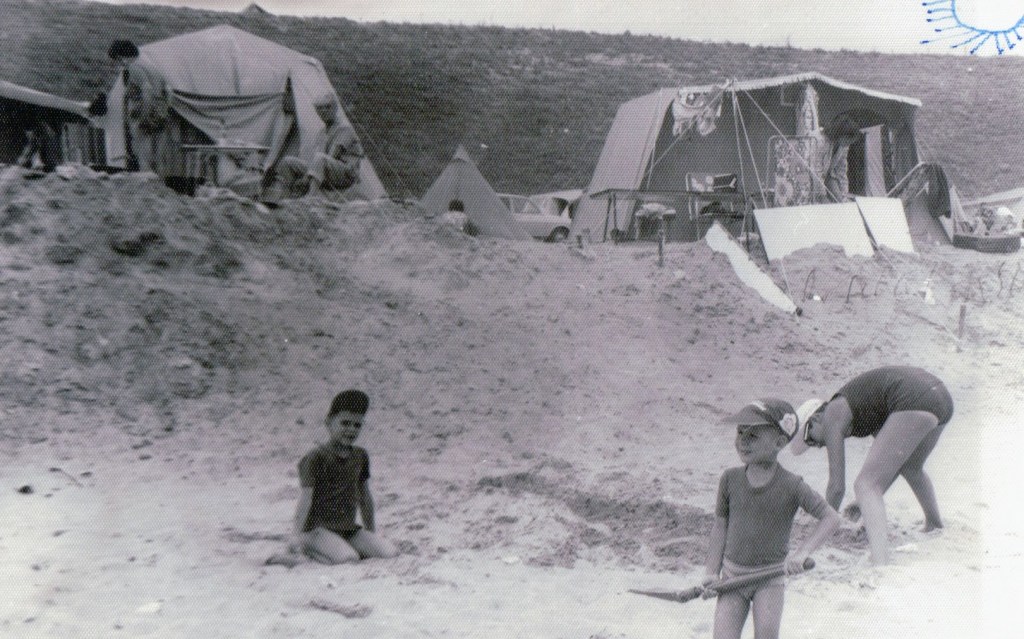
In the 2 Mai Village, on the cliff above the nudist beach, there were Border Patrol barracks. It’s not hard to imagine what they were looking at instead of the coastline. At least they were somewhat discreet, and I never heard anyone complain. Come to think of it, it was the same in Costinesti (the Communist Youth Seaside Resort): Border Patrol barracks on the cliff right above the nude beach. I think it was a placement strategy (or maybe a recruitment initiative?), although no one knew for sure which came first: the chicken or the egg, the nudists or the barracks.
On the nudist beach, at 2 Mai, there was a bar where blocks of ice were brought in every day. Let’s not forget, it was the early 70s. We had some thin, plastic coolers, the ancestors of today’s ones that actually work and keep cold, and that was about it. Instead, we dug deep holes in the sand and placed the ice and the coolers there, covered in thick plastic wrap to save every last drop of cold water. People stood in line at the bar dressed only in flip-flops, both men and women crowded together. Only common sense (an oxymoron?) dictated the distance between them. Yet those who (intimately or not) know Europe even a little bit know that Europeans don’t really have a clear concept of personal space, and that people tend to jostle in line. For reasons I only later understood, we (kids) were not allowed to stand in that line. The only one wearing something that vaguely resembled a speedo was the bartender.
I spent many, many early years at Papa Ghinea’s place in 2 Mai. From his backyard, you could directly access the beach. You would pass through a large garden, sometimes getting lost in the cornfield, while hearing secretive giggles in the distance. Papa had a shower in the backyard, an iron barrel where the water would heat up from the sun. To save water, our parents told us to wash off the sand at the beach showers and give ourselves a final touch back at our host’s place. Whenever my father would take us to the nice resorts or to the amusement park in Neptun, we had to freshen up beforehand because, you know, we were going to The City. But where did everything dry? On a clothesline, of course!
Because we, the children, used to stay there for at least a month, adults would take turns with the parental responsibilities. Half of the time my mother, half of the time my aunt. Many times they overlapped for a while. Sometimes, the male adults remained with us. My uncle more often (and stayed longer), my father less so. After three days, he would get bored and pretend that he had a business trip to go to. Sometimes the host couldn’t keep us for that long, so we had to move to the beach, in a tent. So, here we were, back at the nudist beach campground. If this sounds crazy and complicated, it wasn’t. Or it was, but we just didn’t notice or care.
Vama Veche
If I ever knew to begin with, I don’t remember why, but instead of 2 Mai, we started going to Vama Veche. We stayed at Nea Petruș’s, The Shepherd, the last house in the village on the left, almost on the border [between Romania and Bulgaria].
Uncle Pupi had introduced us to the host. He spent most of every summer there and knew everyone. The road to the beach was a dusty path lined with a well, thistles, wild plants, dried dill, sheep dung, seaweed, and seashells—a blend of smells that remains firmly anchored in my memory.
In Vama Veche, nudism was widely practiced. However, because the beach ended right next to the Border Patrol barracks, there was no promenade—and no cliffs. Instead, the beach was separated from the barracks by only a barbed wire fence, and soldiers regularly patrolled, politely asking adults to put on swimsuits. There were no written rules, neither allowing nor forbidding nudity. It was simply something the communist rulers had never anticipated, so they neglected to legislate it. Only their prudishness dictated the unwritten law.
Despite this, the soldiers were always courteous. How do I know? I remember it being a topic of family discussions. My dad would say, ‘Come on, Pupi, let’s get dressed because the sergeants will scold the kids for not enforcing the rule.’ (The ‘kids’ being the young soldiers, and the ‘rule’ being the unwritten one, of course.)
This was when my dad and Uncle Pupi would reveal their tiny, fabulous bathing suits. Made of cotton and tied with a string on one side, they were loose enough that, when lying on their backs, all the jewels of the kingdom were on display. These suits had been with them for many years and were unlike anything else on the beach. They found them incredibly comfortable, and I even regret not keeping my dad’s—well, actually, his only one.
Uncle Pupi’s was pure white, and after so much sun exposure, his skin had turned nearly black. The contrast was striking. My father’s was dark brown, matching his skin tone so well that, from afar, it sometimes looked like he wasn’t wearing anything at all. Funny, in its own way.
The New Vama Veche
I went to Vama Veche (this loosely translates as Old Border Crossing) in 2018, with Irina. The village had turned into a resort, the hosts were now on Airbnb, vrbo, or booking.com. The charm of the past had disappeared, and the house where we stayed before had become, instead of the last one on the left, merely one of many. There were about five more streets now, right up to the end of the village. This fact surprised me a bit because it meant that the developers had entered the border strip, the No-Man-Land between the two countries, but I don’t think they were bothered by it too much.

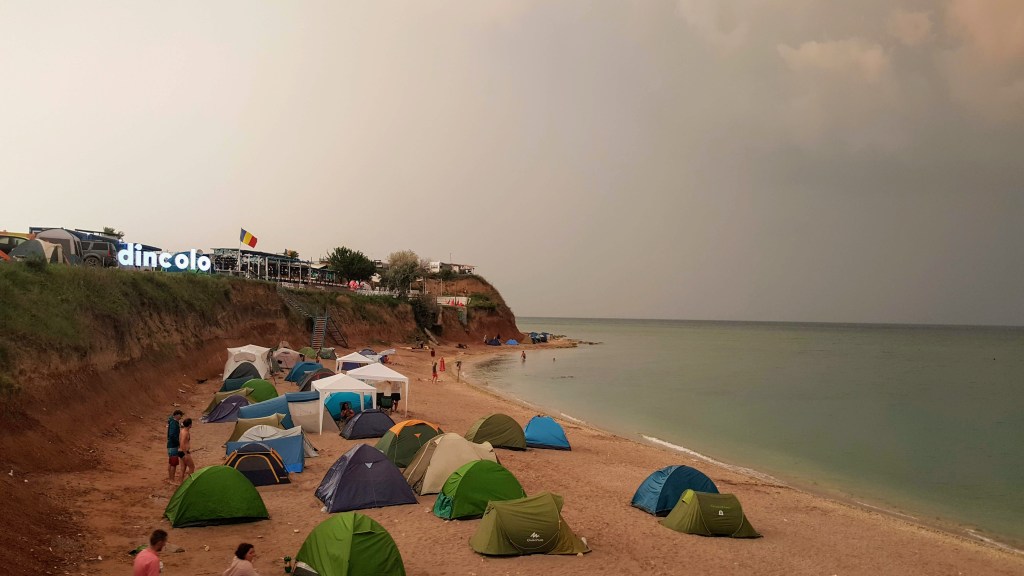
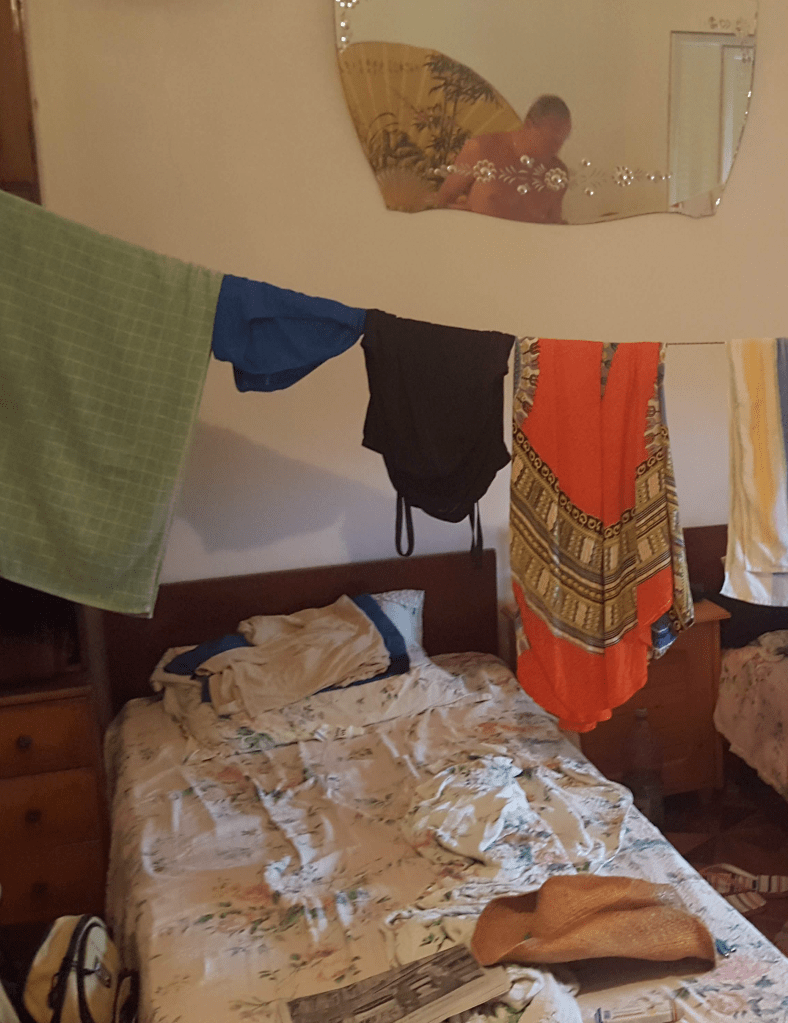
What was interesting was that I found the old house and its amazing host, who was the daughter of Mr. Petrus. The shepherd had passed away, and his daughter had become a super host, and she had expanded. If the swindlers had taken land towards the border, she had taken it towards the sea. The well was no longer there, and neither were the thistles. There was only dust, weeds, and the scent of expensive sunscreen. We got to talking, so it must have been about 45-50 years earlier when I was there with my extended family, taking up all the rental units. My mother had badly injured her leg when running from the outdoor kitchen to the bedrooms to bring us food. The soil was clayish and slippery. It was raining hard and she had slipped and broken her leg and the ambulance had come, a big commotion. We were trying to jog the host’s memory, and suddenly she said, “You are Mr. Doru’s son!”
She had no recollection that a woman had broken her leg in two places and had the cast on for six months and had nearly ended up limping for the rest of her life.
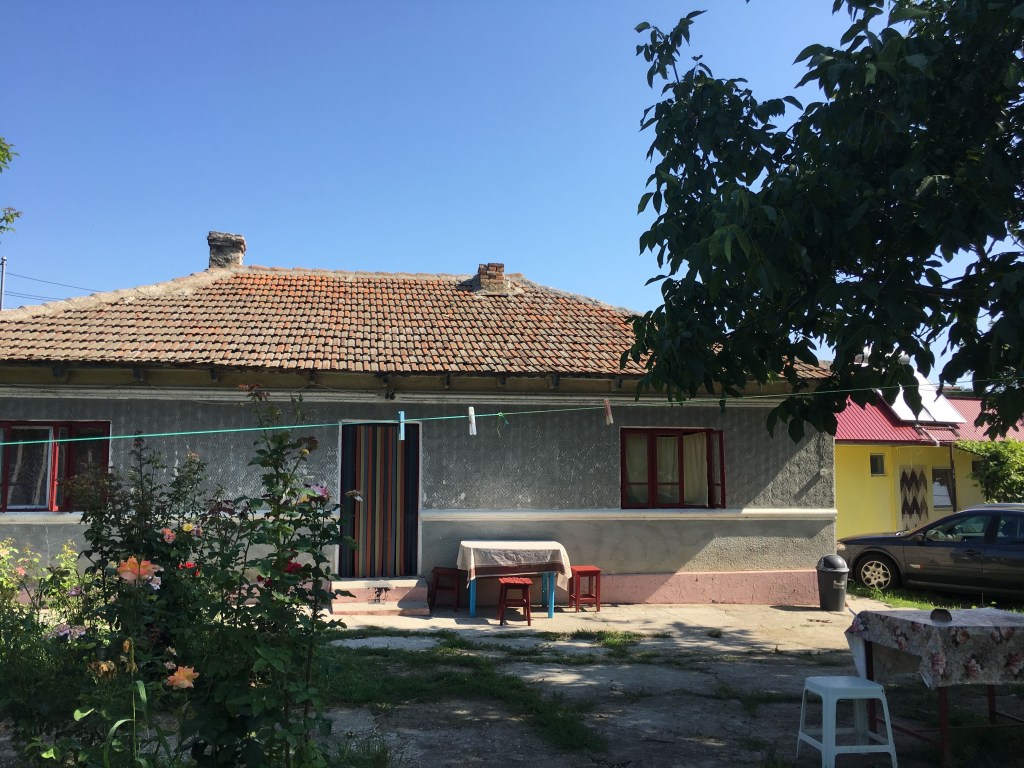
where my Grandfather was solving crosswords and math problems
Irina almost fainted: “This woman has an incredible selective memory! She was only 15 years old back then! And she only remembers your father…”
The Last Day of Freedom
I should make my story shorter. As Dad would say, ‘Stop talking so much—you just don’t know when to stop.’ But I can’t stop. I just remembered the last time I stayed in 2 Mai. It was after college (and the mandatory internship), with none other than the future Mrs. Popescu.
Yours truly did what he knew best: I brought my girlfriend to our old host, proudly showed her the outdoor shower with its metal barrel, and then led her to the beach—specifically, the nude section. She, being shy, kept her swimsuit on, Ibiza style (topless). I, on the other hand, went full Dad-mode: butt naked.
We were having a great time until her brother, who was staying with his wife and kids at a resort in Olimp, got bored. In his infinite boredom, he decided to see what his sister was up to. Of course, he found us …

The man invited us to their hotel. We didn’t want to go, but he had a quick chat with Irina—as only big brothers can—and she promptly stood at attention. So, off we went.
I didn’t enjoy it. Everyone was freshly showered, dressed differently, and they ate at the restaurant every night. It was exhausting. But, as I said, that was my last visit to the charming little village of 2 Mai.
Since then, we’ve only stayed in hotels. I didn’t exactly perish from all the comfort, but I can’t say I’ve ever been a fan of it.
Across the Pond – Atlantic City
Around ’98 or ’99, during our first road trip in the US, we went with some friends to Atlantic City to grab a bite and hit the beach. That’s where I had my first ‘all-you-can-eat’ buffet experience at one of the many casinos. I ate until I could hardly breathe.
Back then, I was a rookie in the fine art of buffet dining, but I quickly got (literally) a taste for it. Over time, I did my homework, honed my skills, and turned buffet eating into both an art and a science. As a result, the house profit margins were noticeably reduced.
To ease my overstuffed breathing, we went to the beach. I was proudly wearing my Romanian swimsuit—a daring Speedo. The beach was packed with families, kids, and moms, and after a while, I noticed people were giving me odd looks. Confused, I asked my friend, ‘What’s up with these people? Why are they staring like that?’
He rolled over laughing. ‘Ștefan, that’s a gay-style swimsuit! Just look at what we’re all wearing.’ Sure enough, everyone else was in swimsuits that looked like shorts. I cursed under my breath, threw on my own shorts, and reluctantly retired my Speedo.
I still have it, though. I can’t bring myself to throw it away—nor the other 8 boxes of clothes I’ve hoarded over the years. That’s just how we Popescus are: borderline hoarders.
Discover more from Nea Fane - Un Biet Român Pripășit în America / A Hapless Romanian Stuck in The US
Subscribe to get the latest posts sent to your email.
 Nea Fane - Un Biet Român Pripășit în America / A Hapless Romanian Stuck in The US
Niiiiice man… I have never been to any of those places, but I bet it was something similar to Sf. Gheorghe (in Delta) — raw and pure… well without the nude beaches… 🙂 Awesome… Thank you, Dan Ghibus
LikeLike