NOTE: This is the English version of the Romanian Sforicica
- Mini Introduction
- The Early Years
- The Great Bulldozing – Communist Style
- The teen years – learning how to walk the rope
- Apartment Life
- A Time of Change and Some Clotheslines
- From Wires to Drying Racks: A Tale of Clotheslines and Life’s Transitions
- Hulubeşti: A Legacy Between Ruins and Resilience
- The New World
- The Ending
Mini Introduction
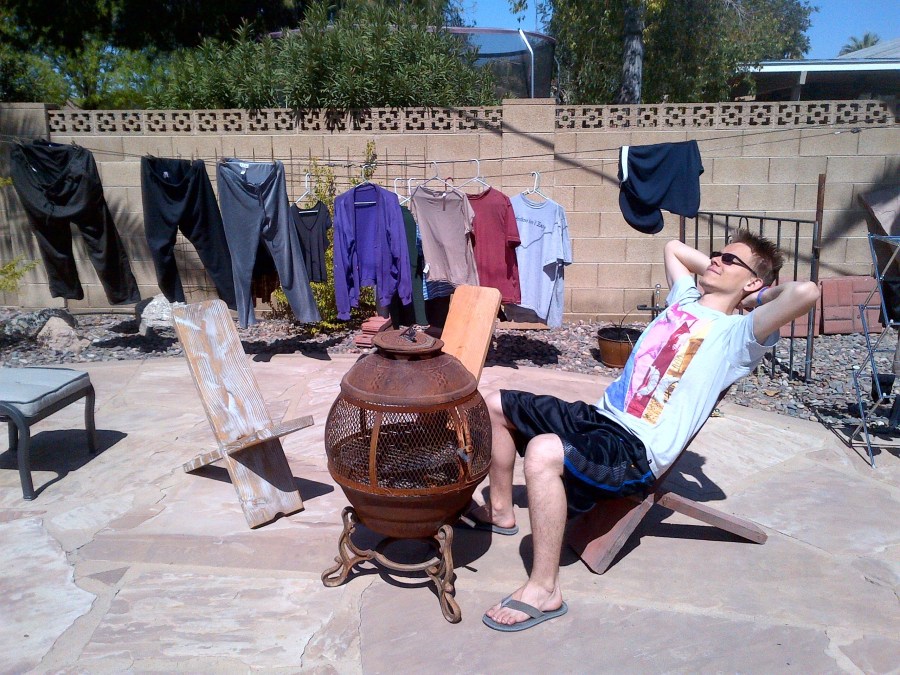
Initially, I was captivated by the idea of pursuing a doctorate in Clothesline Studies, with a subject as mundane as “Clotheslines – An Integral Part of Romanian History.” However, through a stroke of luck and a series of visual aids, including the image below, a mesmerizing revelation struck me. I suddenly realized that line-drying has been an age-old practice that has persevered throughout the centuries, transcending the barriers of culture, geography, and social status. It is truly astounding how this seemingly normal act connects people from all walks of life, across different countries and cultures.

And so, I made the courageous choice to delve into the profound significance of the humble clothesline, an object seemingly ordinary but remarkably intertwined with our existence as the illustrious Popescu family, and, more precisely, with my life.
The Early Years
Since I was a mere child, our humble abodes were inundated with an assortment of books, an array of intoxicating elixirs, and an abundance of clotheslines. We pioneered the revolutionary concept of B&B: books and booze. Nestled within our magnificent villa in Ploiești (a thriving city located a scant 45 miles from the capital, Bucharest), resided a grandiose attic that could have been used as an entire residential apartment. With its lofty ceiling adorned with exquisite wooden beams, it exuded an air of grandeur. This sacred space became my escape, where I secretly indulged in the forbidden pleasure of cigarette smoking, forever vigilant of the potential hazard that loomed. Oh, the perils that accompanied the delicate dance among the labyrinth of strings!
There was an elaborate network of ropes, each one meticulously selected to cater to all our hanging needs. From the thickest ropes to the finest threads, they were an elegant ensemble, supporting everything from bed sheets to tablecloths and shirts.
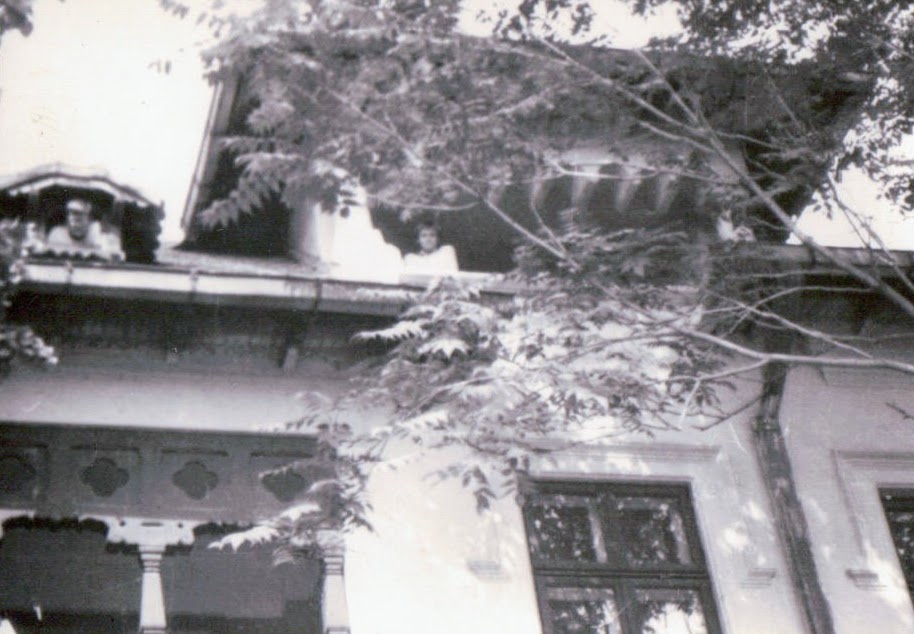
We then settled into Bucharest for my high school years, having transported our furniture and, of course, all the essential clotheslines. The stunning villa we called home was a sight to behold. With its exquisite crystal doors, solid hardwood floors, meticulously hand-crafted fireplaces, and a captivating sunken-in blue bathtub (which I had momentarily forgotten about, but my friend Mișu remembered fondly), it exuded a timeless charm. To add to our delight, we had a cutting-edge biphonic stereo, a remarkable JVC (ahead of its time) obtained from the underground market. I had few tapes with real music: Jazz, Johnny Cash, and some carols from Austria (some of them I still remember, I found on youtube – “Eine Muh, eine Mäh, eine Tätärätätä …”). Though the villa posed some challenges with its three levels and steep staircases, getting into the attic proved to be the biggest hurdle of all. We ingeniously resorted to drying our clothes on the patio with the trusty clotheslines. As for the cellar, it was reserved for storing supplies such as coal, pickled vegetables, wine, spirits, preserves, and firewood.
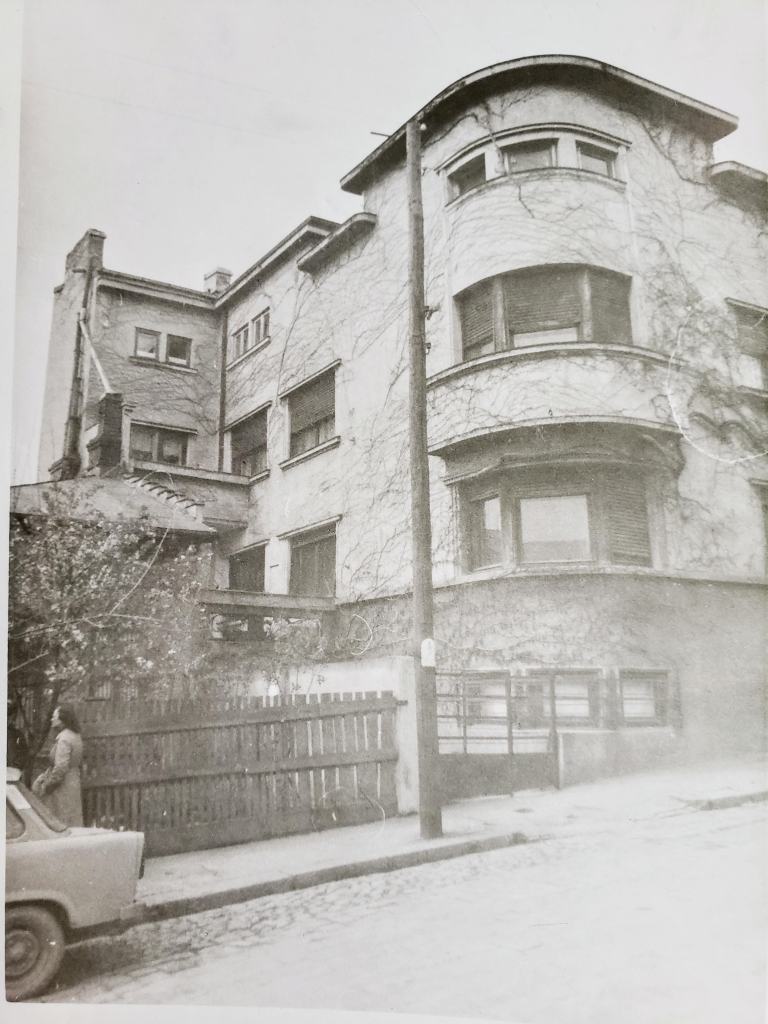
Big mistake: during the first winter, we made the regrettable decision to dry sausages on the patio. The next day, they had mysteriously disappeared, leaving behind only the wires. Everyone within a three-block radius heard my dad placing the blame on my dear mother, causing me great emotional distress. This incident made me envious of my neighbors, particularly the one living downstairs, who had the convenience of a small enclosed yard for drying her laundry, and the neighbor upstairs, who had easy access to the attic.
The Great Bulldozing – Communist Style
Two things are worth mentioning. First, the presence of large, handcrafted, ceramic fireplaces/stoves in every room, which were exclusively powered by firewood and coal because of the absence of a gas supply in the area. If one attempts to disassemble such a stove, regardless of his precision and/or skill, he will find it impossible to reassemble it, as these stoves are constructed on-site. Furthermore, it is important to emphasize that these stoves cannot be converted for use with natural gas. While this particular observation did not yield any practical benefits for us, the homeowners, it was intriguing to witness the greediness and sheer stupidity displayed by the brave communists of that time.
Writing about that house in Bucharest, I remembered the “vanished neighborhood,” an entire area with old, beautiful houses known as the Uranus neighborhood. It was a historic, safe, and stable (earthquake-wise) area, highly regarded even (or especially) by Ceaușescu. In any other country, those houses would have been preserved for their historical value.
However, one day “the beloved leader” decided to demolish all the houses because they stood in the location where he wanted to build “The People’s House,” which is now the Palace of Parliament – a massive structure that amazes visitors but often overlooks the personal hardships endured for the cause of its creation. The demolition was executed through what is known in the US as eminent domain, but at a scale never attempted before, without providing any compensation. The residents had very little time to relocate, and they were assigned new apartments without any choice in the matter.
My parents resorted to contacting the very few influential connections they had and offering bribes to secure better outcomes. To everybody’s surprise, they succeeded, and we moved into a charming two-bedroom apartment in a building close to the best Farmers’ Market in the World, Obor (this was the only silver lining).
My mother told me that, as she was still packing and loading the moving truck, two Securitate colonels directed workers to remove valuable items from inside the house — fireplaces, crystal doors, wooden floors, the absolutely fantastic iron front door — without any consideration for the devastated homeowners. The impact was profound, and a lot of people suffered mental breakdowns. Some even committed suicide. However, we resided in that house for only a brief period of three years, wonderful high school years, prepping for the mid-high school admission exam (I’m not getting into details regarding how the educational system worked), and later for the college admission exam, so we didn’t have much time to become too attached, which perhaps spared us from total despair.
During the period of demolition and relocation, I was serving in the military, I left from one house and returned to another without any opportunity to assist. It was my mother who single-handedly managed everything, while my father was, regrettably, but understandably, a complete wreck.
While the demolition took place, the boys with blue eyes, as we used to nickname the Securitate goons, were crawling the streets not allowing any pictures to be taken. The students from the College of Architecture were making drawings of the houses, silent witnesses of the destruction and loss.
The teen years – learning how to walk the rope
Through my experiences, I learned that not everyone shares the same customs or preferences. I was initially surprised to discover that clotheslines are not universally used, and later, that nudist beaches like 2 Mai and Vama Veche are not enjoyed by everyone. This realization opened my eyes to the diversity of human perspectives and preferences.
I was, in my pre-adolescent years, going to Vatra Dornei (a small town and ski resort nestled between mountains in the northern part of the country) to ski with my uncle’s family and his friends and their families. For reasons that even now escape me (and which I think my uncle even now regrets), we were also invited (that is, my parents were, but, because they had no one to leave me with, they bribed me with a set of new skis – if I do well on the slopes – and brought me along with them). We hopped on the night train, picked up two gallons of homemade plum brandy from the Professor’s brother at the train station in Buzau, and then slowly, slowly, traveled all night until we reached Vatra Dornei and checked into the hotel.
I don’t remember exactly what it was like with the food during the day and where we were all eating (with the food store kind of empty, but with the farmers’ market decently stocked), but what I know for sure is that every evening people gathered in each other’s rooms, took turns, ate, drunk, and told stories, having a great time. The ladies of the house (or rather, of the rooms) made something out of the big nothing available at the grocery store (singular, because there was only one). Still, everyone had a blast.
In the evening when it was my parents’ turn, Mon Oncle came to our room to see how we were doing. My Uncle opened the door and was left speechless. All he could say was “Bro, bro, it’s not possible, brother. What the heck, bro!” I sat there in amazement. I didn’t understand why he was so angry. Mom’s face turned red, and Dad remained calm, as if nothing was wrong, asking his brother, “What’s the matter, little brother? Does something smell bad around here? My socks, maybe?”
In our room, there were two strings spread out, on which were drying my father’s and my underwear, freshly washed thermals, and everything else that needed to be dried after a day on the slopes. With this “glorious” set-up, my family awaited the guests.
Many years later, I understood that not everyone carries a ball of string with them, and, even if they do, they don’t use it all the time. That evening, however, we moved to another room – to my Uncle’s – so that their friends wouldn’t be surrounded by our drying laundry.
The Big Apple – Walking on the 5th Avenue
My thoughts jump, and I remember Mon Oncle in New York on 5th Avenue. They had come to visit us, and there was also my mother “visiting” for six months, aka helping us with Cosmin. We were always happy when we had guests; we got to take time off from work and be tourists. My little son was in the immigrant’s cart (the famous black metal cart on wheels), and my uncle was pushing it. He was very cheerful and relaxed. My mother looked at him, ecstatic, and said to me, “Look, Stefan, what a nobleman he is. Look how distinguished he is and how nonchalantly he pushes that cart!” In truth, if we had gone out 2-3 more times, he would have started a new trend. Or in the 2020’s or so, he would have become an influencer. However, since it was the end of the 20th century, I only have pictures that I look at with nostalgia…
Oh, how I miss those visits, the laughter, and the simple joys of being together.
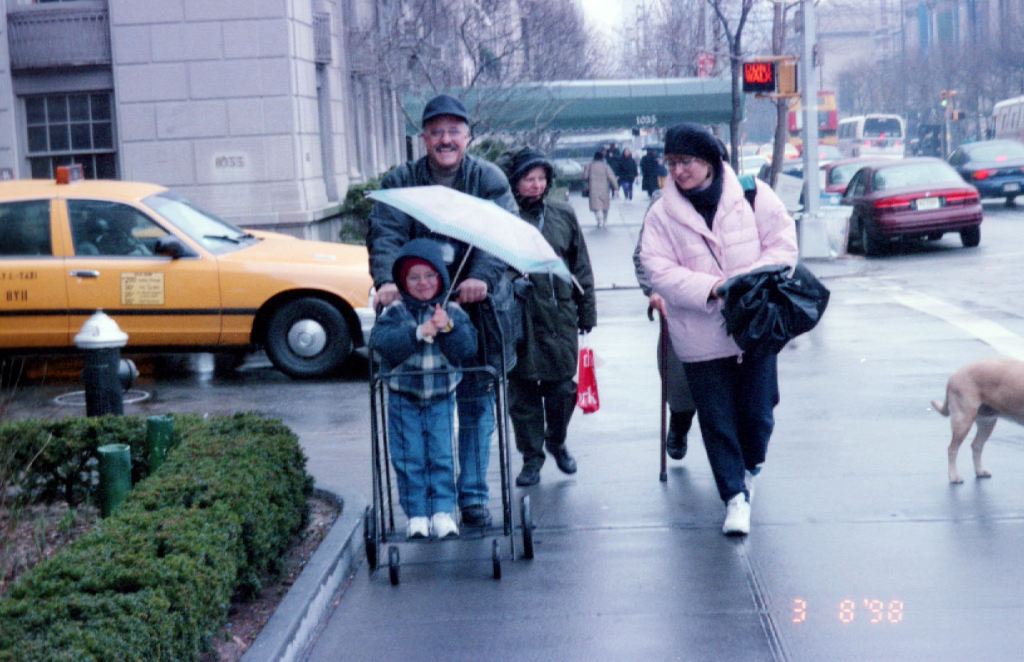
(My Aunt, my Mom, my Uncle, my Wife, my Son, and my Mom’s cane)
Apartment Life
I should make my story shorter. As Dad would say, “Stop talking so much, you just don’t know when to stop.” But in Bucharest, I stayed in at least four different houses, so I have to continue. And in every house, there were clotheslines, either inside or outside. So here I am, storytelling tirelessly.
In the kitchen of our Dimitrov apartment, a testament to my father’s creativity and resourcefulness resided: a long, strategically placed wire. This single element transcended its basic function, acting as a doorstop, a hanger for heavy items, and even a window prop when a draft graced us with its presence. However, caution was required with the draft. As everyone knows in Eastern Europe, lingering too long between two open doors could invite a pesky cold. With no air conditioning, open windows and darkened rooms became our only solace.The balcony and main bathroom mirrored the kitchen’s ingenuity: both boasted clotheslines, ensuring that we never lacked drying space. On the balcony, we even hung sausages to dry on the wire, transforming the space into a functional drying haven. The spot right by the balcony door, bathed in sunlight, became the designated drying zone for our pajamas, ensuring they would be ready for wear in a flash.
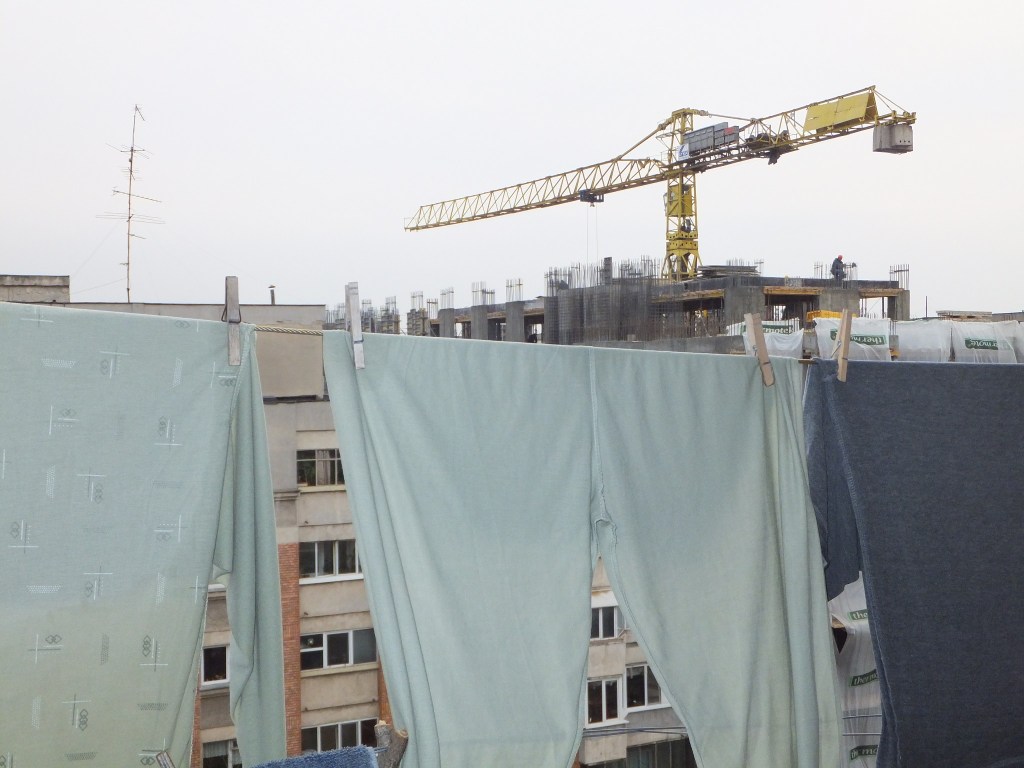
A Time of Change and Some Clotheslines
Two significant events reshaped young Popescu’s life during this period: my uncle and his family’s emigration to Germany, and my own marriage. These fundamental shifts dramatically altered my relationship with clotheslines, and indeed, with (almost) everything else.
My parents moved into my uncle’s home, where my father, inspired by his newfound space, embarked on a project – constructing the most sophisticated clothesline network in the entire neighborhood. This marvel of engineering became the envy of not just the neighbors themselves, but also their wives. Of course, this clothesline network, a testament to my father’s creativity, resided in a prominent location – the front yard. It stood proudly alongside two ugly makeshift chicken coops. And a pig coop, just for good measure.
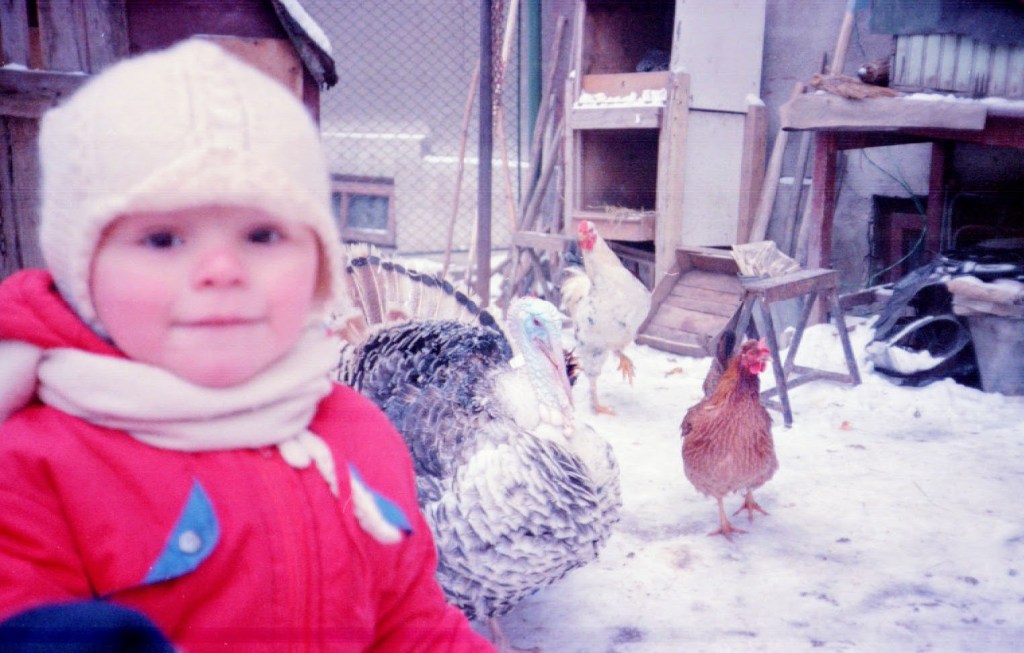
It was a vibrant scene, full of life and sound. When the neighbors expressed their displeasure with the noise emanating from Dad’s feathered friends, a piglet would promptly appear, as if to demonstrate that things could always be worse. And when my father’s displeasure with the neighbors reached its peak, he employed a unique strategy: he would purchase turkeys. The turkeys served a dual purpose. As the holidays approached, they would become the centerpiece of celebratory meals, their meat tenderized by a special “technique” involving a generous amount of wine or brandy. This practice also offered a humorous lesson in Romanian folklore, as it revealed the origin of the expression “walking like a drunken turkey.”
The Schnauzer Surprise: A Canine Tale
My mind drifts back to a time when my dad, under the impression of doing his brother a favor, presented him with a gift: a Schnauzer puppy. Or so he thought. In truth, my uncle’s family, still grieving the loss of their beloved dog, Clan, a majestic mix of Saint Bernard and Romanian Shepherd, yearned for a new companion, and they wanted a Schnauzer. During a visit to the Obor Swap Meet with Dad, to buy nails or something, we stumbled upon a man peddling a box full of squirming, curly black fur.
“What breed are these?” I inquired, skeptical.
“Schnauzers, young man!” Dad declared with unwavering confidence.
“Dad,” I countered, “at this age, they could be anything.”
Unfazed by my doubts, the street-smart vendor seized the opportunity. “Schnauzers, gentlemen! Look,” he exclaimed, gesturing towards Dad, “the gentleman recognizes quality and he knows breeds!”
Overcome with pride at his alleged canine expertise, Dad fell for the ruse and, eager to please his brother, purchased the puppy.
Upon receiving the furry surprise, my uncle nearly fainted. Undeterred, he sought veterinary expertise to identify the dominant breed. After an hour of looking over thick tomes and breed catalogs, the bewildered vet concluded that the dog defied categorization. His papers declared him simply a “mixed breed” or, more colloquially, a “mutt.”
Despite his dubious origins, the dog, affectionately nicknamed “Tempete” (or Stupido, even if his official name was Negrone, meaning “Blacky”), quickly stole everyone’s hearts. Well, almost everyone’s. While Tempete brought joy and warmth to the family, I couldn’t help but wonder if my uncle’s sudden emigration to Germany had more to do with escaping the dog’s boundless energy than taking his children to greener pastures. Regardless of his origins and the slightly questionable circumstances surrounding his origins and arrival, Negrone found his place in our hearts, weaving a tale of canine confusion and unexpected affection.
The Unexpected Diversion: A Tale of Pigs and Soldiers
As I mentioned earlier, from time to time, Dad would buy a piglet…
Hmm, the plot thickens.
My uncle’s house was behind the Department of Defense Headquarters. Every day, soldiers, along with their sergeant, marched past the house, singing patriotic songs, loud and clear, so all the citizens could hear and know they were being defended by these brave soldiers.
In our backyard, I hope you didn’t forget, we had chickens, a dog, a cat, and the little piglet. Every time the soldiers walked past the house, their cadence would skip a beat and their eyes were sliding to the right. The sergeant couldn’t help but burst into laughter. The entire military routine went out the window. One day, as they were passing by, the sergeant yelled, as usual, “Eyes forward, soldier! Don’t you dare laugh! Resume march!” However, after just five minutes, two soldiers showed up, running, with Blacky and Cleopatra, the little piglet, tied with belts instead of leashes. They told Mom, “Hey, M’am, the piglet and the pup were two blocks away, digging through a pile of trash. The sergeant thought it would be easier for us to bring them back to you than to have you chasing after them.”
Little did Cleo know that her destiny as a little piggy was simply to pack on the pounds. She was filled with joy and excitement as she ran wild with Blacky through the neighborhoods’ narrow streets. When she was finally slaughtered, Cleopatra had so little fat and so much muscle that we chewed on until our jaws ached. We couldn’t help but feel very sorry for her; she was such a sweet little thing, especially when she fell into the outdoor toilet in Hulubești. Amid laughter, squeals, and dogs panicked barks, Mother gave her a good rubdown…
Memories, so many memories … but back to the clothesline.
From Wires to Drying Racks: A Tale of Clotheslines and Life’s Transitions
But back to my story…
My journey with clotheslines took an interesting turn at my mother-in-law’s meticulously ordered apartment. Unlike the vibrant displays I was accustomed to, her balcony featured just five perfectly stretched and parallel wires, devoid of any additional clutter. To my surprise, the kitchen, too, lacked the familiar presence of a clothesline.
As we moved to Pantelimon (an old neighborhood, ongoing a transformation from charming small houses and dusty streets to shoebox-like apartment buildings), my young wife, Mrs. Popescu, quickly established a new rule: no ropes, wires, or clotheslines were permitted to disrupt the aesthetic confines of our new home. “How do we dry the clothes then?” I inquired, perplexed.
Her response was both practical and amusing: “I don’t know, but the neighbors can see us.” This concern was quickly addressed. “There’s no need to worry about neighbors,” I assured her. “We’re on the top floor, at the very end of the building, at the edge of the city.”
Her concern about the neighbors was indeed unfounded. Our apartment was overlooking vast fields of rye and a few factories. We were one of the few occupants of Bucharest’s last-on-the-right apartment building, isolated from any prying eyes. Despite the initial ban, a two-level drying rack soon materialized in our home. This was followed, much to my delight, by the reappearance of clotheslines on the balcony. This coincided with the arrival of our son, Cosmin. Finally, a dedicated space for his tiny diapers!
Life became a whirlwind for the three Popescus. We juggled a young child, two sets of grandparents, two extended families (because one marries not just a person, but their entire family as well!), two regular jobs and an additional side hustle, and of course, my parent’s beloved Hulubești mansion. And amidst this chaos, we cherished those sweet summer vacations where Cosmin, despite his mother’s reservations, experienced the joys of the countryside. While Hulubești might not have offered the creature comforts of the city, it provided something far more valuable: precious memories and a connection to nature.
Hulubeşti: A Legacy Between Ruins and Resilience
Hulubeşti mansion, once a beacon of elegance in Dâmbovița county, stood as a monument to the past. Although its Brâncovenesc style whispered of the Popescu Boyars who built it in the early 1900s, the interior painted a different picture. Years of neglect and pilfering by villagers and the communist regime had left it a shell of its former glory. When news reached the village that the rightful owners would reclaim the mansion, panic ensued. In a final act of defiance, the villagers attempted to clog the indoor toilet with cement and steal bricks. However, the mansion proved, once more, resilient. Its thick, two-foot-thick walls, built with some very special materials, resisted their attempts, sparking and bending nails instead of crumbling. The grand living room, once a space for gatherings, had been transformed into a bread oven for the whole village, further damaging the ceiling and walls.
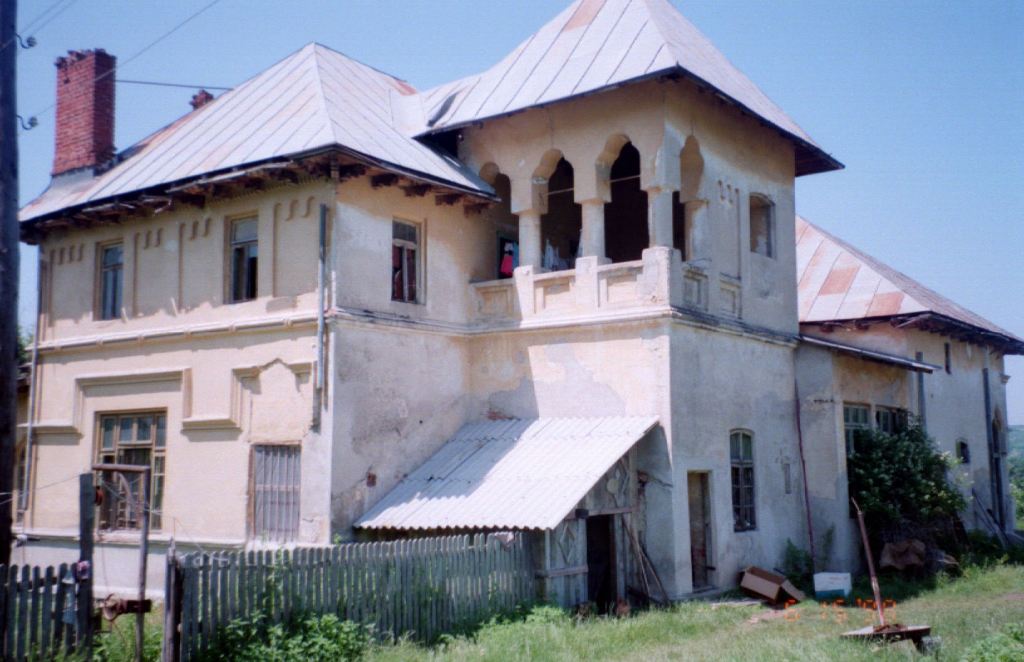
Life at Hulubeşti was a tapestry woven with resilience, tradition, and the occasional touch of humor.
The mansion, though scarred by time and greed, stood as a reminder of our family’s history. It was a place where the past and present intertwined, where memories resonated through the crumbling walls, and where the spirit of the Popescus lived on, even in the face of adversity.
But that didn’t stop my folks from playing farmers for a good few years (until Mom hurt her back), from spring to late fall (even if my Dad wanted to stay through the winter), and taking Cosmin with them for the whole summer, and sometimes longer. Of course, there were strings and wires all over the place – in the yard where my mom did laundry by hand (much to the amazement of the villagers who all had washing machines) and upstairs, in the gazebo.
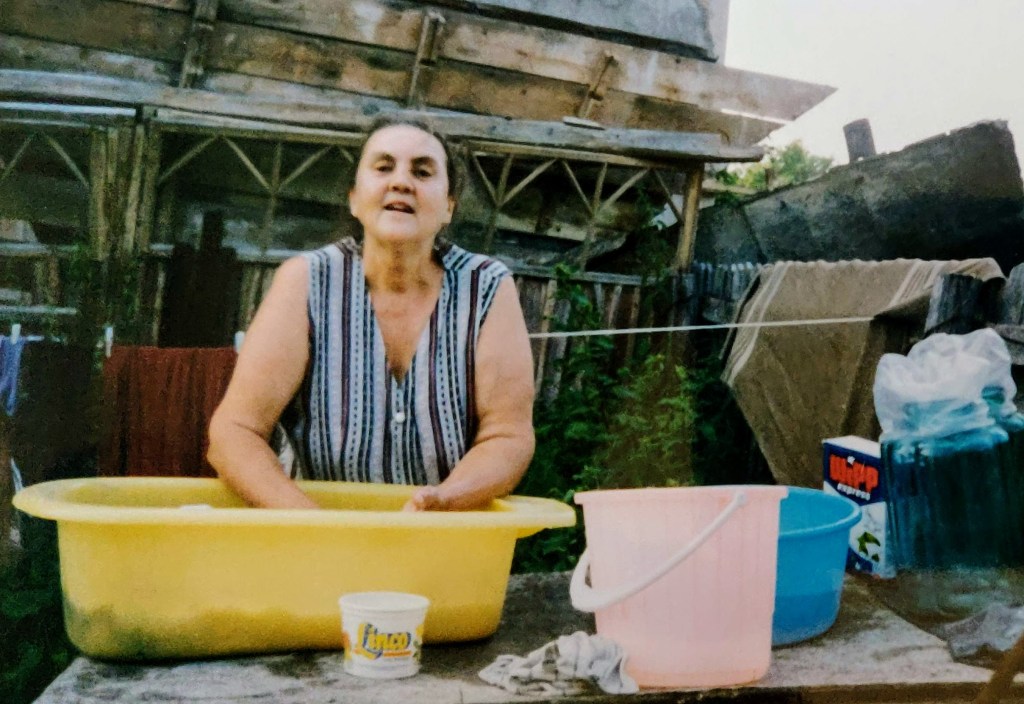
Now, even though there were washing machines available, the drying was still done on clotheslines, much to the delight of occasional travelers who were enchanted by Uncle Niculae’s (our neighbor) granddaughter when his wife wasn’t around to do such work. However, on other occasions, Auntie Mary, Niculae’s 70-year-old hunchbacked wife, was there. Well, you can’t win all the times, right?

The New World
From Mother-Daughter Houses to Boxer Love: A Tale of Laundry and Life in New York
The next chapter of the Popescu family saga unfolded in the bustling city of New York. Our first apartment, shared with my in-laws, was a microcosm of cultural exchange. Seven people crammed into two bedrooms and a living room, surrounded by conveniences like a microwave, three or four TVs, and washing machines and dryers far removed from the traditional world of clotheslines.
Our second apartment, a cozy smaller half of a “mother-daughter house”, offered a different experience. With no washer or dryer on-site, we embraced the quintessential New York laundromat experience. It was a weekly ritual, a melting pot of cultures where conversations flowed as freely as the detergent. My mother, a whirlwind of curiosity and intelligence, used these outings to immerse herself in English, learning from The Cosby Show, dictionaries, and our constant queries. Her enthusiasm was contagious, and each week she returned with an expanded vocabulary and lighter laundry bags.
I, too, found joy in laundromat days. While my mother honed her conversation skills, I delved into the world of labels, deciphering the cryptic language of American products. My father, however, remained steadfastly Romanian, refusing to learn English out of principle. Yet, despite his linguistic limitations, he always managed to communicate, his humor and charm transcending all language barriers.
Eventually, our hard work paid off, and we purchased a quaint little house. As I stepped through the door for the first time, my imagination soared. Visions of clotheslines danced in my head, a tribute to my father and his love for the traditional. But my excitement was short-lived. “No clotheslines,” came the echoing decree. “The neighbors can see us.” My initial amusement quickly faded. “Which neighbors?” I quipped, a faint echo of Pantelimon’s distant fields. The joke fell flat, replaced by the reality of our situation. In truth, the neighbors had a clear view of our backyard, and our two-story house offered a reciprocal view into their lives. Additionally, the presence of a washing machine and dryer rendered the argument for a clothesline moot, or so I was told.
However, as fate would have it, our laundry routine took an unexpected turn. On St. Stephen’s Day, a day of gifts and traditions in our culture, we embarked on a mission to upgrade our aging washer and dryer. Instead, we returned home with Lucy, an adorable little boxer. Though purchased, it felt more like a rescue. This tiny, forlorn soul in the corner of the pet store had found its way into our hearts the moment she saw us, her joyous yelps and playful jumps sealing our fate. Lucy, with her intelligence and unwavering loyalty, enriched our lives for eleven wonderful years.
My father, ever the prankster, found amusement in secretly teasing Irina with impromptu clothesline displays. Their playful banter, a veiled expression of affection, became a familiar rhythm of our lives. We made improvements to the house, added a beautiful awning over the deck, creating a space that could have accommodated a vast, webbing network of clotheslines, hidden from any prying eyes. Yet, the answer remained a resounding “No.” My father, deprived of his beloved lines, carried a silent sadness in his eyes. An abrupt escape to Bucharest, on a mission to pickle cabbage, even if he didn’t have a barrel or any knowledge of the process, became his way of coping.
Arizona: Clotheslines, HOA Rules, and a Change of Heart
The Popescu family’s journey landed them in Arizona, embarking on an adventure that continues today. However, they soon encountered the dreaded “HOA,” a force that some consider a dictatorship inflicted upon working homeowners by housewives (or retirees) with too much time on their hands. Amongst the plethora of rules contained in HOA documents, one stood out: nothing should be visible over the fence, with fines levied for violations. In exceptional cases, beautiful objects could be granted permission for limited visibility. Unaware of these restrictions, my father, captivated by the house, the yard, the pool, and the palm trees, promptly strung up a network of 6-7 clotheslines. Being a tall guy, he hung the wires high in the trees, allowing the whole neighborhood to admire our underwear and socks. Irina’s reaction was nothing short of epic, bordering on police involvement and my father’s potential, if not imminent, deportation. Communication between them ceased for a week until my mother, armed with logic and wine, led them outside to demonstrate what actually could and could not be seen over the fence. After lengthy negotiations and copious libations, a compromise was reached, allowing for the continued use of the beloved clotheslines.
Years passed, and the family moved to a charming house near Arizona State University, where Cosmin had expressed his desire to attend (though he later changed his mind, choosing Tucson instead, but that’s another story). Upon seeing the new house, Irina’s first words were, “Look at all the space to hang clotheslines! And there’s even a set already up between those trees.” It seemed her opposition had softened.
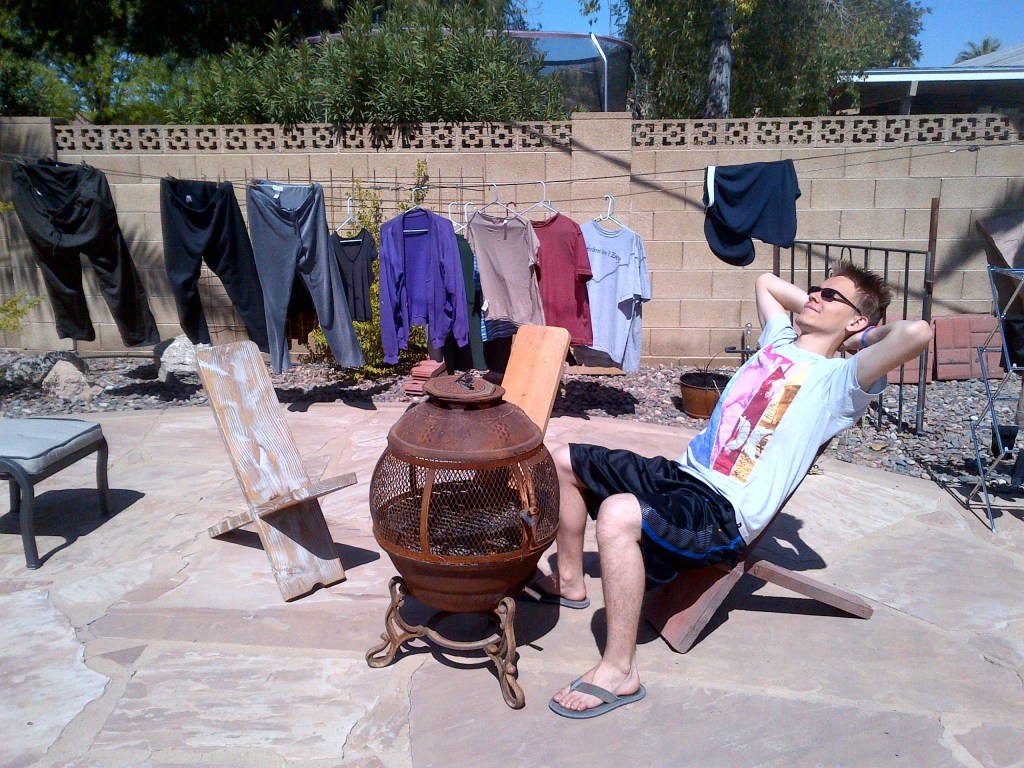
My father, in his element once again, relished this new chapter. He spent his days hanging out with Cosmin at college, enjoying the company of the chicken, cat, and the refreshing pool.
Family Reunions
Cousin Cat, always a welcome addition to the family gatherings, graced us with his presence twice: once solo and once accompanied by Andreea (his wife) and the children. His solo visit coincided with a curious dietary phase, for which his wife prescribed a regimen of soil, DE something, and edible yeast. While his skin glowed with newfound radiance, a hint of hunger lingered in his eyes. In the Popescu family, love is expressed through the abundance of food offered. By this measure, I must be deeply loved, for I am round as a barrel!
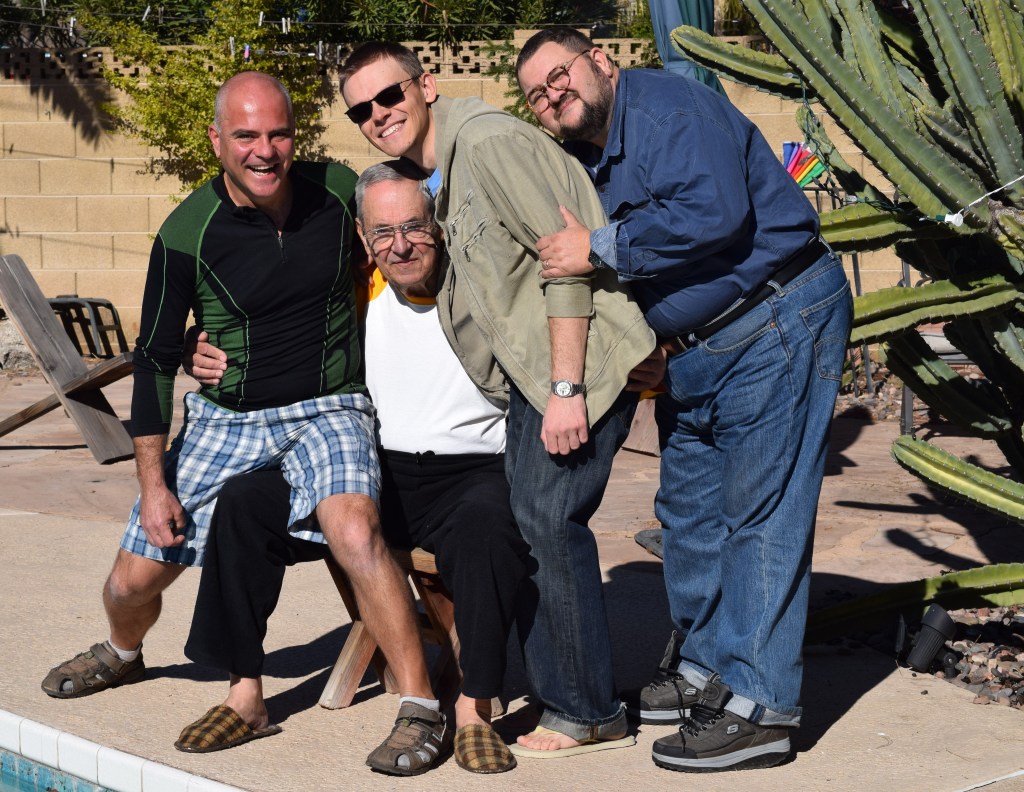
My father, ever the nurturing patriarch, inquired about Cat’s culinary desires. The answer came swiftly: fried potatoes and tripe soup. While the potatoes were a breeze to cook, the tripe soup posed a delightful challenge. We embarked on a culinary adventure, following my mother’s cherished recipe. The pot, our largest, rarely saw the light of day due to its sheer size, but, for this occasion, it was brought out in all its glory. The soup, a symphony of flavors, was devoured with gusto within two days. With a satisfied sigh, Cat looked at me and asked, “Cousin, shall we do it again?”
This simple question resonated beyond the realm of cuisine. It embodied the spirit of our family: a love for tradition, a passion for good food, and an unwavering commitment to sharing life’s joys with one another.
The Great Tripe Soup Debate
A crisp memory flickers in my mind, transporting me back to July 16, 2018. In Dimitrov, where my dad’s apartment was, a gathering unlike any other unfolds. Popescus from two continents and four countries unite, fueled by excitement and anticipation for a vacation in the majestic Carpathian Mountains.
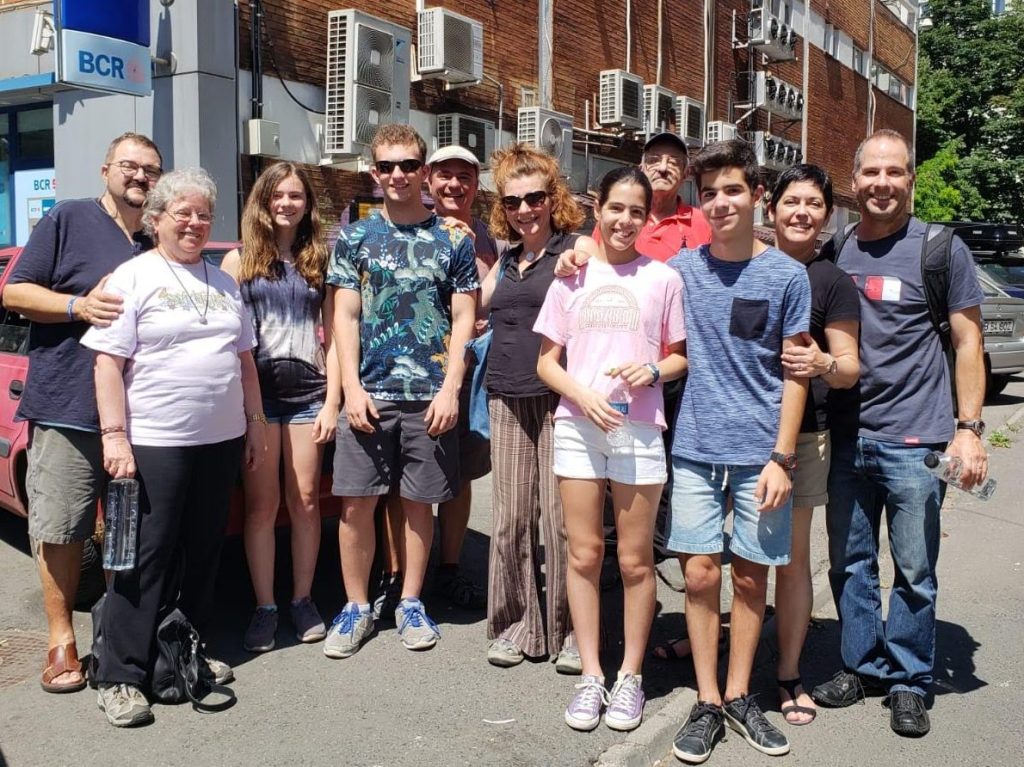
Suddenly, Andreea, radiating determination, declares, “I’ve heard tales of the best tripe soup in Romania, served at a most unexpected place: the Sinaia train station!” (Sinaia, a mountain resort and jewel of the Prahova Valley, prepares for an influx of hungry Popescus.) This bold statement hangs in the air, a challenge unspoken. Had my father still been with us, his usual retort, “A very courageous claim,” would have sparked a lively debate. But in his absence, silence reigns, and Andreea’s statement remains unchallenged.
The Popescu clan embarks on their journey, leaving the question of the “best tripe soup” unanswered. This unresolved mystery burns in my mind, a culinary quest left unfinished. The very notion of a definitive “best” in the realm of food, especially for dishes like mici, smoked meats, and tripe soup, is a slippery slope. To claim one outshines all others is a matter of personal preference and deeply subjective experience.
For example, I might declare my tripe soup the best, while acknowledging Dani’s mici as superior to any found at the Terasa Obor. Who can objectively refute such claims? Tripe soup itself occupies a unique culinary space. It is a love-it-or-hate-it affair, with no middle ground. No polite nibbles or “I’ll have a little just to be polite” here. You either embrace its bold flavors or politely decline. This food-fueled journey has taken me down a delicious rabbit hole, and it has also served as a timely reminder to indulge in the present, prompting me to grab some ribs from my fridge. Because my ribs are the best ribs in Arizona, of course.
From Camping Fiasco to A Renewed Love for the Outdoors
The Popescu’s mountain vacation ignited a spark within me, rekindling the desire to explore the outdoors. Years had passed since “the great camping fiasco” of 2006, a memory that cast a long shadow over my willingness to venture into the wilderness. However, with a new group of friends by my side, I felt a renewed sense of adventure stirring within me.
But what is a camping trip without proper gear? Ropes, in abundance, became the rallying point for our preparations. These weren’t just any ropes; they were symbols of resilience, of overcoming past fears and embracing new experiences. We acquired so many ropes, in fact, that we even found ourselves lending them out to friends – a testament to the contagious spirit of our adventure.
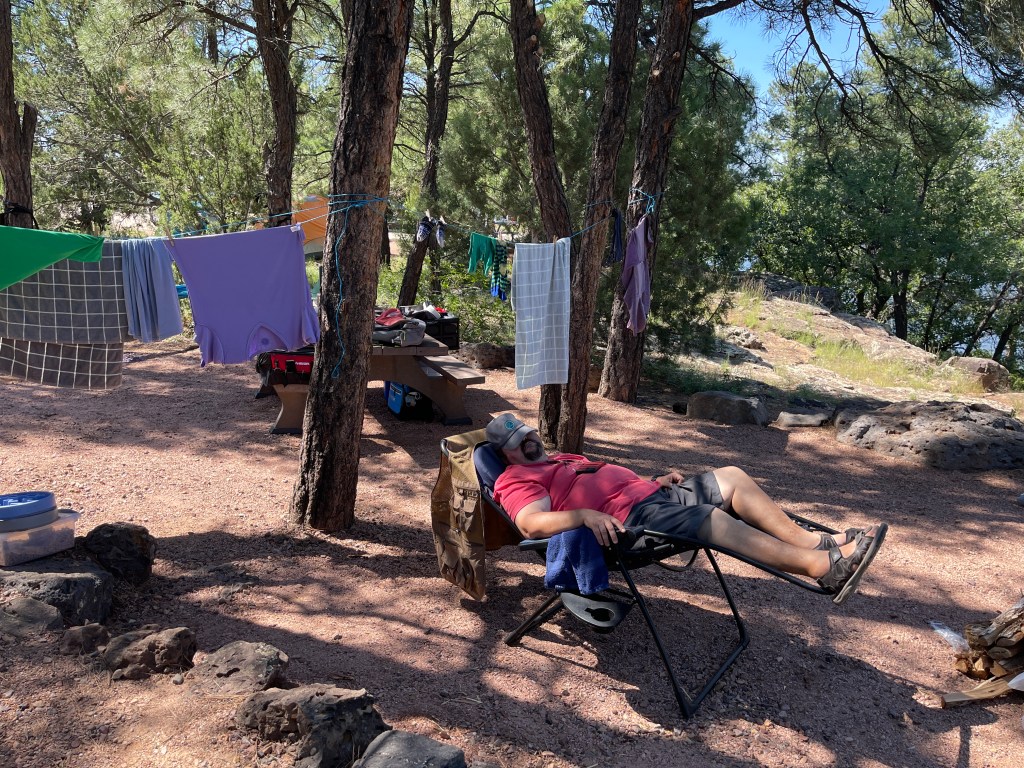
Man broken by … fatigue
Our camping trip unfolded into a tapestry of laughter, shared stories, and the simple joys of being surrounded by nature. The ropes, though seemingly mundane, held a deeper meaning. They represented the bonds of friendship, the strength to face challenges, and the courage to step outside our comfort zones.
New Home and A New Beginning
In 2016, life threw us a curveball. My father was diagnosed with cancer, and shortly after, in early 2017, we faced the unexpected need to move from our comfortable home with its chickens, pool, spacious yard, and beloved clotheslines. As the saying goes, life throws punches, and we had just received two in quick succession.
Given my frequent travel between Bucharest and Arizona, the responsibility of purchasing a new home fell primarily on Irina and Cosmin. We had two key priorities: a manageable yard and, surprisingly, no pool.
As the house purchase neared completion, I was brought along from the airport to see it. As we stood there, Irina suddenly erupted in a panic, “We have nowhere to put the clothesline!” I stared at her in disbelief. “Woman,” I thought, “what have you done with my Irina, the one who once loathed clotheslines?” Indeed, the house lacked adequate shade in the back. However, a creative solution emerged. By opening umbrellas, I created a makeshift drying system, perfect for Phoenix’s climate where clothes dry quickly under the sun. Nine months out of the year, laundry became a breeze, drying within 30 minutes. We cared little for the potential disapproval of neighbors or the HOA, as we had found a practical and efficient solution to our needs.
Why do we choose to dry the clothes when we have a state-of-the-art dryer? Only Irina can answer this question properly so, wisely, I will shut up. (Later, I found out – I had the bright idea of drying a cashmere sweater in the dryer, and despite using the proper setting, I ended up retrieving a Medium from what was once an extra extra large.)
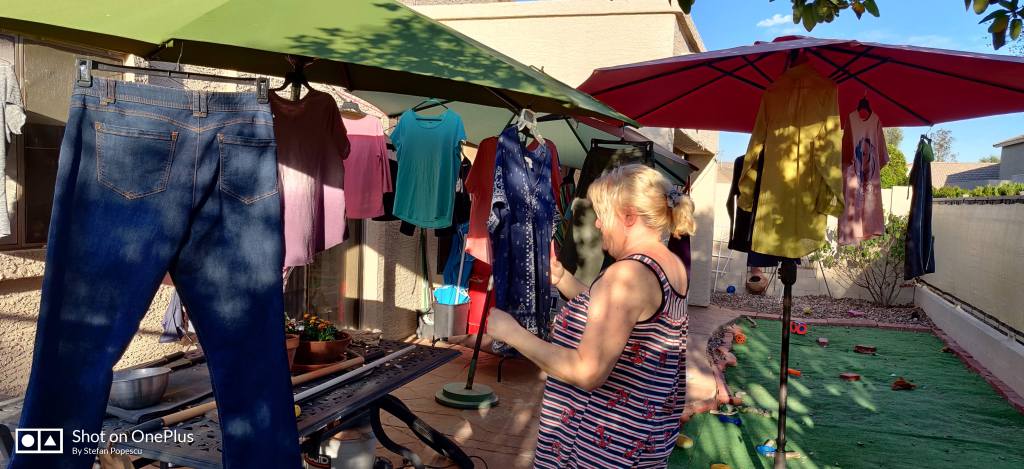
A Tale of HOA and Adaptability: A Super-Duper Drying System
Life under the watchful eye of the HOA can be fraught with challenges, as our friends discovered when they erected a majestic gazebo in their backyard, without seeking permission. Their joyous mood quickly turned sour when they received a demolition order and the threat of a hefty fine. Amidst this chaos, we entered the picture. Witnessing the friend’s frustration as he loaded the gazebo frame onto his truck, we offered to take it off his hands. He readily agreed and, sensing that his truck was better suited for the task than our little car, he even brought it to our house, on the other side of the valley.
Having learned from others’ mistakes, I embarked on a mission to gain HOA approval for the gazebo. I meticulously prepared a sketch, a drawing, an architectural request, and even threw in a pinky promise for good measure. To my surprise, the HOA granted permission, paving the way for our project. However, the original textile covering was no longer available, forcing us to adapt. We transformed the gazebo into a pergola, essentially a roofless structure with a cloth top. Instead of fabric, we opted for a special sun-protective material, providing shade without obstructing the open-air design. Our creativity and resourcefulness led to the construction of the coolest clothes drying system we had ever owned, all for a modest price.
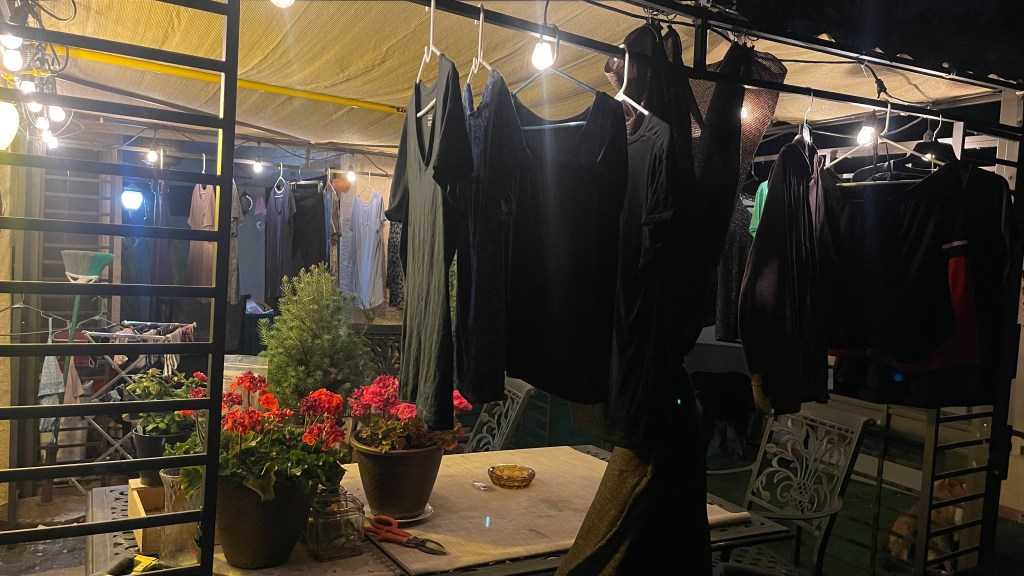
Wherever we go, our trusty string companions accompany us, be it an Airbnb, a campsite, a hotel, or even a friend’s house. So important are these strings that they have earned their own category on packing lists, joining the ranks of dog food and other travel essentials.
The Ending
And as I am ready to pull the strings and close the curtain on this story, I am left with the heartwarming realization that it’s not just the clothes that dry on those lines, but also the memories, the laughter, and the love that binds my family together.
And to not end the story too abruptly, I found the photos below on my photography group that perfectly match my narrative and which fit like a glove – err, like a pair of underwear – with my story.
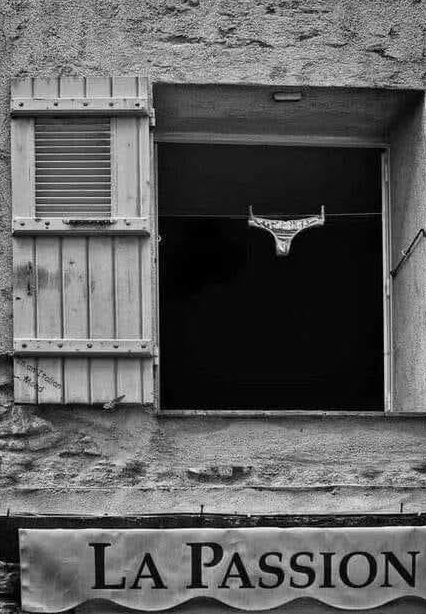
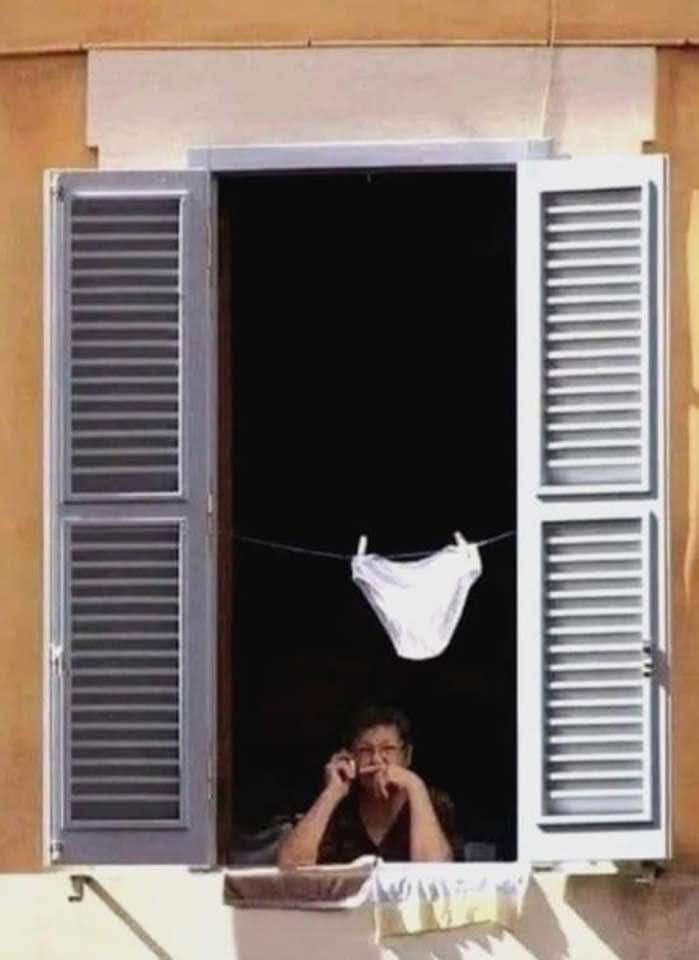
Source: Facebook
Discover more from Nea Fane - Un Biet Român Pripășit în America / A Hapless Romanian Stuck in The US
Subscribe to get the latest posts sent to your email.

 Nea Fane - Un Biet Român Pripășit în America / A Hapless Romanian Stuck in The US
Mestere, Iar mi-ai adus aminte de copilarie… Thank you, and keep them coming… Dan Ghibus
LikeLike
Thank you!
I try to write them “in pair” Romanian and English, but it takes me a while, many times is a re-write, not only a translation.
LikeLike
Take your time. Oldies but goodies… Thank you, Dan Ghibus
LikeLike