No fancy introductions, just straight to the recipe. The ingredients are given using the metric system due to international cooking conventions, except for the temperature, which I have already converted to Fahrenheit to avoid any confusion.
Ingredients
- 1 kg all-purpose flour
- 700 ml lukewarm water
- 20 grams sugar
- 14 grams dry yeast or 50 grams fresh yeast
- 20 grams salt (not Himalaya)
- 50 grams oil
- extra flour for the working space
Instructions
Add the lukewarm water (90-100 F), sugar, and yeast to a bowl big enough to hold the flour, sugar, and yeast (remember, you start with one kilo of flour). Add the oil and all the flour and mix with a wooden spoon for 20-30 seconds after adding the salt. There is no need to worry about the shape or consistency.
The first rise – 1 hour
Cover the bowl with plastic wrap and leave it for an hour. It will raise a lot.
Mix with the wooden spoon for another 20-30 seconds. There has already been a change in the dough’s behavior.
The second rise – 30 minutes
Repeat the above steps, cover it with the plastic wrap and leave it for another 30 minutes.
After the 30 minutes have passed, it’s time for the (in)famous stretch and fold:
When done correctly, it will strengthen the gluten and gently incorporate air into the dough without kneading. The benefit is an increase in volume, a lofty high rise, and if you’re lucky a more open interior crumb.
The technique can be done on the countertop or directly in the bowl; I did the countertop option.
- Stretch the dough on the countertop
- With lightly wet fingertips, press the dough until you make an approximate rectangle
- The dough should be folded three times on itself on the length (like a letter), rotated 90 degrees and then folded three times again until you get something like a ball.
- Cover it with a cloth and let it rest for 10 minutes.
- Repeat: press, stretch, fold, rotate, fold
The 3rd rise – 1 hour
Make some cuts on the bread with a very sharp knife (a scalpel works best) and generously sprinkle flour on top.
Cover it with the same cloth and let the dough raise for an hour.
Baking the bread
During the third rise, heat the oven to 475 F. If you have a convection oven, even better. Meanwhile, heat a pot with thick walls and a lid in the oven. I used a 6 quart cast iron Lodge.
When the oven reaches 475 F and the pot is very, very hot, you have to move fast (and don’t forget to wear thick kitchen gloves): open the oven, pull the shelf with the pot, take off the lid and throw in the dough, put back the lid, push the shelf back, close the oven door, all of these in under 30 seconds so the temperature will not drop too much.
Lower the oven temperature to 450 F and set the timer to 30 minutes.
Clean around in the kitchen. If you move fast enough you can also clean the living room, the bedrooms … you get the idea.
After 30 minutes open the oven, remove the lid, close the oven and lower the temperature to 390 F. Set the timer to 15 minutes.
Final steps
Take out the bread on a kitchen rack and check it: turn it upside down and knock on it (don’t do the toothpick test) – if it sounds hollow, it’s done.
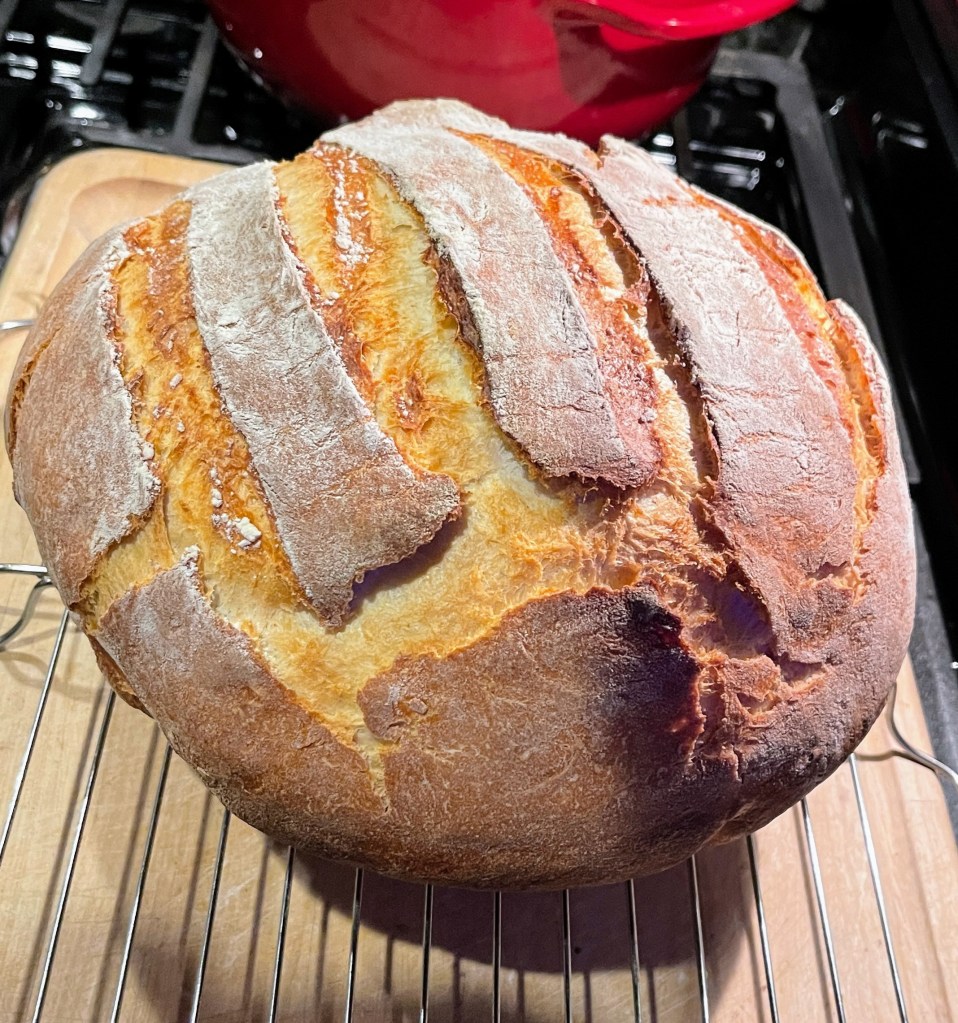
The most difficult steps are now: wait for it to cool down and do not eat it all at once.
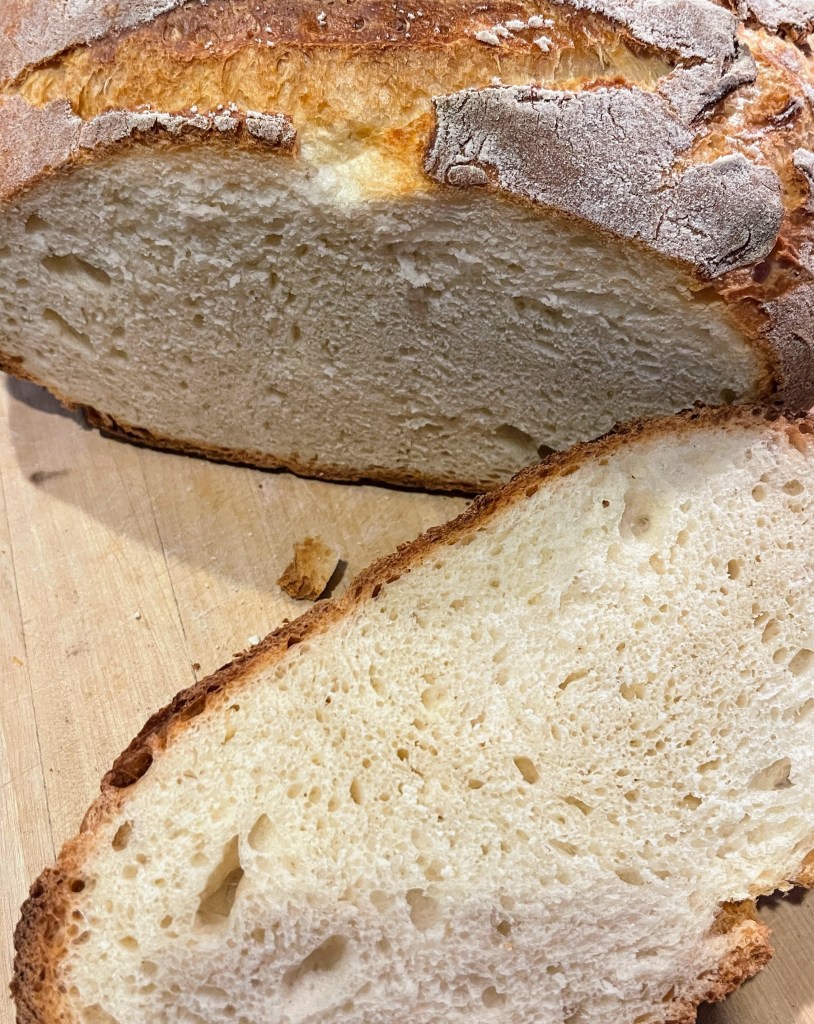
Thoughts:
- it can be saltier
- I can use half of the ingredients
- it can be fluffier (it’s kind of dense)
- for a first try, it’s surprisingly good
Source: https://savoriurbane.com/paine-de-casa-neframantata-reteta-rapida/
Discover more from Nea Fane - Un Biet Român Pripășit în America / A Hapless Romanian Stuck in The US
Subscribe to get the latest posts sent to your email.

 Nea Fane - Un Biet Român Pripășit în America / A Hapless Romanian Stuck in The US